
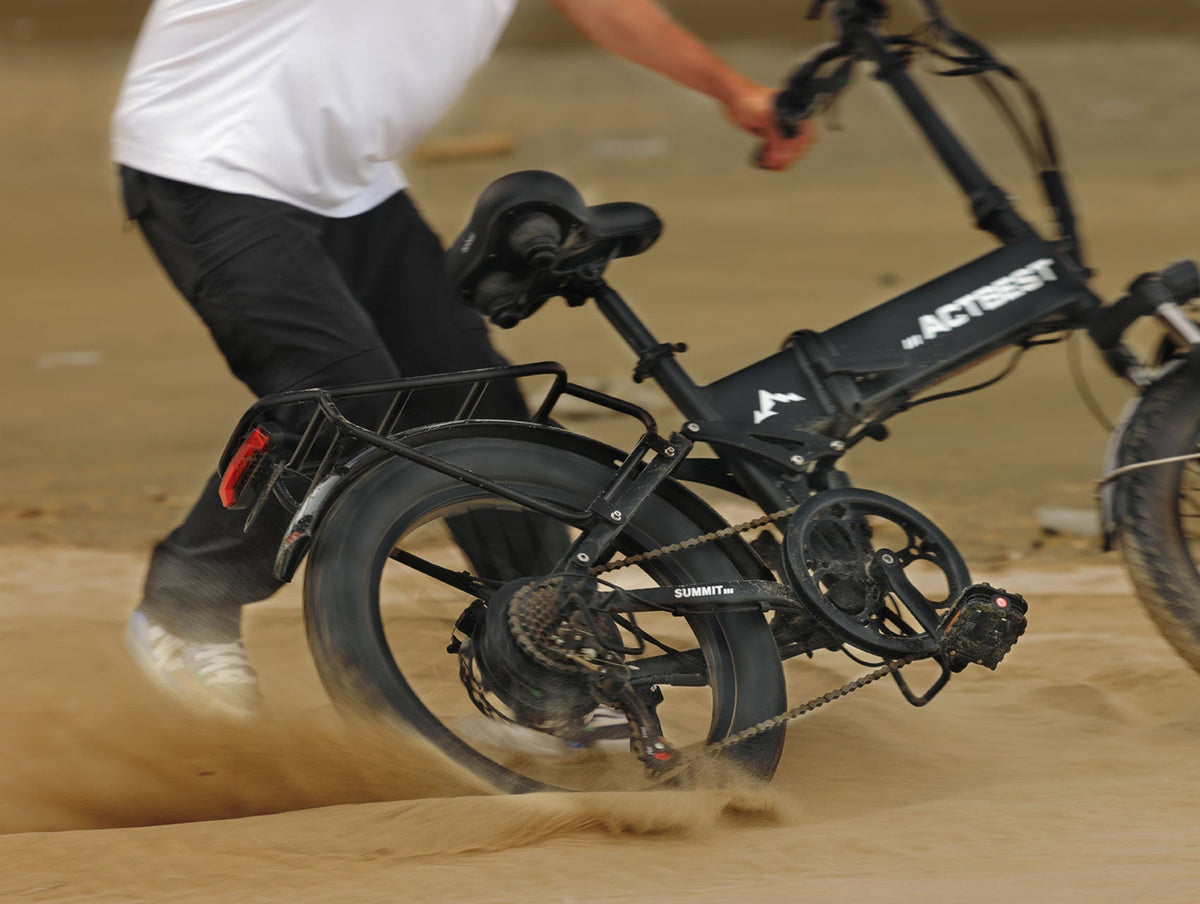
The total cost of e-bike ownership covers every cost incurred from buying the bike until you sell it. From the purchase price and sales tax to the helmet, lock, and other accessories, and even any battery replacements, the overall cost can be much more than you see on the price tag.
The cost of owning an electric bike depends on the exact model, annual mileage, local electricity rate, and maintenance needs. But you can’t just estimate the cost in isolation. You’ve also got to factor in the transportation being replaced.
That’s why the real cost of ownership is the money that actually leaves the owner’s account, set against the money that might otherwise have been spent.
E-Bike Ownership Cost at a Glance
Typical Cost Categories
Everyone pays close attention to the price tag. It makes sense. It’s the single biggest payout involved with an e-bike. But it’s not the only cost to consider. You must also factor in the e-bike charging cost, the battery replacement cost, and any other expenses that get forgotten about.
|
Cost type |
What it includes |
When you pay it |
|
Upfront |
Bike, tax, assembly, helmet, lock, and carrying equipment |
Before the first ride |
|
Recurring |
Charging, routine servicing, insurance, and storage |
Monthly or annually |
|
Periodic |
Tires, tubes, brake pads, chain, and drivetrain parts |
When worn or damaged |
|
Major |
Battery, controller, display, or accident repairs |
Only when required |
|
End of ownership |
Resale credit or disposal cost |
When you sell or retire the bike |
Why One Average Number Can Mislead
There’s no reliable answer to how much an e-bike costs per year. If you only use the bike lightly on weekends, it may consume little electricity and require next to no maintenance. By contrast, a daily commuter bike could rack up thousands of miles, plus wear on the tires, brakes, and other components.
You might also have few maintenance requirements during the first year. However, in the fifth year, the battery may need replacing. Which year do you consider? How do you calculate the average?
The only number that truly matters is the lifetime cost of the e-bike.
Upfront Costs Before the First Ride
Bike Purchase Price
The electric bike purchase price is only the beginning of the calculation. It matters. It’s often the most expensive item on the list. But going for the cheapest option might end up costing you more money in the long term through component replacements.
That said, price alone does not dictate quality. Often, the difference between entry, mid-range, and premium options is power, battery size, and more specialist features rather than just quality. For example, a more expensive e-bike might use hydraulic brakes, a 1,200W motor, and have better customer service. But that doesn’t make much difference for a light commute.
Essential Setup and Accessories
You’ll also need to consider the e-bike accessories cost. Here’s a quick checklist:
- Properly fitted helmet
- Lock suited to the parking risk
- Additional lights or reflectors if the bike’s equipment is insufficient
- Rack, basket, or panniers if not included
- Pump and pressure gauge
- Basic tools approved for owner maintenance
- Spare tube or puncture-repair supplies
- Rainwear, reflective clothing, or other weather equipment
Tax, Shipping, Assembly, and Financing
The ticket price isn’t necessarily the full cost of the transaction. Shipping, local taxes, and even assembly (if required) can increase the total cost.
Considering that e-bike costs can stretch into the thousands, not everyone has that kind of money to hand. If you still need an e-bike, you can opt for financing. You can find zero-interest offers, but only if the buyer meets the terms and pays no related fees.
Recurring Annual E-Bike Costs
Electricity and Charging
Charging an e-bike is surprisingly cheap, especially when compared to the cost of gas or public transport tickets.
Here’s the calculation:
Battery energy in kWh = voltage × amp-hours ÷ 1,000
Wall energy per equivalent full charge = battery kWh × (1 + charging-loss assumption)
Charging cost = wall energy × local electricity price
Annual charging cost = cost per charge × equivalent full charges per year
In the US, the EIA reported a US residential average of 18.34¢/kWh for June 2026. If you travel 5 miles per day, commuting 5 days per week, across a year that’s 1,300 miles — equivalent to $5.50 per year (assuming 15% charging losses).
That’s one of the most economical transportation methods around.
Routine Maintenance
Routine maintenance is where many of the hidden costs are. Owner-performed work includes:
- Check and correct tire pressure
- Inspect tires, brakes, spokes, cables, fasteners, and electrical connections
- Clean and lubricate the chain appropriately
- Keep the battery contacts and charging port clean and dry
- Complete only adjustments permitted by the manual and within the owner’s competence
What’s more expensive is the general tune-up. You can expect to pay more for:
- General tune-up
- Brake adjustment or hydraulic service
- Wheel truing and spoke-tension problems
- Drivetrain replacement
- Bearing or suspension service
- Motor, controller, display, wiring, or battery diagnosis
- Repairs requiring specialist tools or electrical knowledge
The overall e-bike maintenance cost depends on mileage, weather, road conditions, component type, rider load, and how much work the owner safely performs.
Consumables and Unexpected Repairs
Some replacements are predictable; other repairs can occur out of nowhere. It’s sensible to factor in these replacements, leaving some money aside for when they occur.
|
Item |
Replace or inspect when |
Cost source required |
|
Brake pads |
Manufacturer wear limit, contamination, or poor braking |
Compatible part plus labor |
|
Tires and tubes |
Damage, puncture, casing failure, or excessive wear |
Exact size and model |
|
Chain |
Measured wear reaches the drivetrain manufacturer’s limit |
Compatible chain plus fitting |
|
Cassette or freewheel |
Confirmed wear or repeated skipping |
Exact replacement and labor |
|
Rotors |
Below marked minimum thickness, damaged, or persistently warped |
Compatible rotor and labor |
|
Display or controller |
Fault confirmed through diagnosis |
Model-compatible ActBest part |
|
Shop labor |
Repair or installation required |
Dated local quote |
Security, Insurance, and Storage
Security might seem like a small cost. It should still be a major consideration. Replacing an expensive bike will cost far more than investing in one or two high-quality locks. You’ll also want to take every possible precaution, including registering the bike and recording the serial number.
Insurance is one option if you’re concerned about theft away from home. If possible, you might consider secure storage or, at the very least, remove the battery when parking.
Battery Replacement, Depreciation, and Major Costs
Battery Lifespan Is a Range, Not a Deadline
You’ll usually see battery lifespan listed in years or charge cycles. Either way, it’s only an estimate. A charge cycle means using the equivalent of 100% of the battery’s capacity, not necessarily draining it from full to empty in one go. Two rides that each use 50%, for example, add up to one cycle.
Calendar age matters too, even if the battery is lightly used. Temperature, frequent deep discharges, riding conditions, and long-term storage can all affect its condition. You can help extend its useful life by following the model-specific charging and storage instructions and always using the approved charger.
Read our battery-lifespan guide for more information.
Replacement Price and Warranty Coverage
A replacement battery is likely to be one of your highest long-term costs. At the time of writing, ActBest replacement batteries start from $345, although the exact price depends on the model. Never assume a battery is compatible simply because the voltage matches. The connector, casing, capacity, mounting system, and electrical controls must also be suitable.
Our current battery warranty lasts for one year, subject to its terms and exclusions. Normal wear, unauthorized modifications, unsuitable chargers, and improper use or storage may not be covered. Check the latest ActBest warranty policy before calculating your potential replacement cost.
Depreciation and Resale Value
Your e-bike may still be worth something when you’re ready to replace it. The resale value will depend on its age, condition, battery health, service history, and availability of compatible replacement parts. Keeping the charger, keys, receipts, and maintenance records can also make the bike easier to sell.
For an accurate ownership estimate, subtract the expected resale value from your total spending. Don’t then add depreciation separately, as that would count the same loss twice.
ActBest One-, Three-, and Five-Year Ownership Model
How much could an ActBest e-bike really cost you over several years? To find out, we compared three different options: the Core 2.0 commuter bike, the folding Summit, and the all-terrain Ranger 2.0.
This isn’t meant to predict your exact spending. It’s a worked example showing every assumption behind the calculation, so you can adjust the figures to match how you’ll actually use the bike.
What We’ve Included
Here’s what our e-bike total cost of ownership calculator assumes:
· Bike prices: The Core 2.0 and Summit cost $599, while the Ranger 2.0 costs $769. Prices were checked on September 1, 2026.

· Buying the bike: You pay in cash, receive free shipping, and assemble the bike yourself. That means $0 for financing, interest, shipping, and assembly. Local sales tax is excluded.
· Accessories: You spend $200 initially on a helmet, strong lock, pump, tools, and basic spares.
· Annual use: You ride five miles per day, five days per week, covering 1,300 miles annually.
· Charging: The bike uses an average of 20Wh per mile, with another 15% allowed for charging losses. At 18.34 cents per kWh, that works out to just $5.48 per year.
· Maintenance and repairs: You spend $200 per year on servicing, $75 on consumable parts, and keep another $50 aside for unexpected repairs. One current US workshop charges $200 for a standard e-bike tune-up, although prices vary considerably.
· Insurance and security: No separate insurance is included. The lock comes from the initial accessory budget.
· Battery replacement: We haven’t assumed that the battery will need replacing within five years. If it does, the current ActBest spare-battery price is $349. Always confirm the price and exact model compatibility before buying.
· Resale value: We’ve estimated that the bike retains 50% of its purchase price after one year, 25% after three years, and 10% after five. These are calculation assumptions rather than guaranteed resale values.
What Could Each Bike Cost Over Time?
The following figures show the cumulative ownership cost after subtracting the estimated resale value.
|
ActBest model |
After 1 year |
After 3 years |
After 5 years |
|
Core 2.0 commuter |
$830 ($0.64 per mile) |
$1,641 ($0.42 per mile) |
$2,392 ($0.37 per mile) |
|
Summit folding bike |
$830 ($0.64 per mile) |
$1,641 ($0.42 per mile) |
$2,392 ($0.37 per mile) |
|
Ranger 2.0 all-terrain bike |
$915 ($0.70 per mile) |
$1,768 ($0.45 per mile) |
$2,545 ($0.39 per mile) |
The Core 2.0 and Summit cost the same in this example because their purchase prices are identical and we’ve applied the same running-cost assumptions. The Ranger 2.0 costs slightly more because of its higher initial price.
Over five years, the modeled annual e-bike cost is around $478 for the Core 2.0 or Summit and $509 for the Ranger 2.0. A battery replacement would add another $349.
Is an e-bike worth it? That depends on how often you ride and what those journeys replace. If the bike regularly saves you from paying for fuel, parking, transit, or rideshare trips, the financial argument becomes much stronger.
Calculate Your Own E-Bike Ownership Cost
Total Cost and Cost-Per-Mile Formulas
Start with the complete e-bike total cost of ownership formula:
Total ownership cost = purchase price + tax, shipping, and assembly + financing interest + accessories + electricity + maintenance + consumables + insurance, security, and storage + battery replacement and repairs − resale value
Don’t add the financed amount again after including the purchase price. Only the interest and fees are additional costs.
You can then calculate:
Annual ownership cost = total ownership cost ÷ years owned
E-bike cost per mile = total ownership cost ÷ total miles ridden
Transportation savings = cost of replaced journeys − e-bike ownership cost
Enter each cost separately in a spreadsheet or calculator. That makes it easy to update one assumption without rebuilding the entire estimate.
Four Usage Scenarios
The same e-bike can look much cheaper or more expensive depending on what it replaces. AAA estimates that fuel and maintenance for a new car average around $0.24 per mile, while annual ownership costs add another $7,973. Current prices for the three ActBest models compared above range from $599 to $769.
Weekend riding, around 500 miles per year. Replacing car journeys would avoid roughly $120 in annual operating costs. That won’t recover the bike’s $599–$769 purchase price quickly, although recreational value may still justify it.
Daily commuting, around 2,400 miles per year. The equivalent car journeys cost approximately $577 in fuel and maintenance. That nearly matches the price of a $599 ActBest within the first year.
High-mileage riding, around 5,000 miles per year. Avoided car operating costs reach approximately $1,202 annually. Compared with an ActBest costing $599–$769, that creates a potential first-year saving of $433–$603 before e-bike running costs.
Replacing a second car, around 4,000 miles per year. Average ownership and operating costs could approach $8,934 annually. Choosing a $599–$769 ActBest instead creates a potential gross difference of around $8,165–$8,335, provided the bike genuinely removes the need for that car.
Sensitivity Check
The biggest factor is what the bike replaces. Whenever you’re using your bike for commuting or high-mileage riding, you’re either replacing public transportation or a car. That can mean hundreds of dollars in potential ticket fees.
The really interesting part is removing a second car. Avoiding an occasional car journey only saves around $0.24 per mile. Eliminating the second car can save thousands of dollars.
Mileage is the other biggest factor. Lower gas spending, less servicing, and fewer repairs can make a big difference over a year of commuting.
E-Bike vs Car, Transit, and Rideshare Costs
|
Cost area |
E-bike |
Car |
Public transit |
Rideshare |
|
Starting cost |
Bike and accessories |
Vehicle, tax, and finance |
Usually none beyond the fare or pass |
None |
|
Regular spending |
Electricity and maintenance |
Fuel, insurance, maintenance, and fees |
Tickets or passes |
Fare, price variation, and tips |
|
Parking or storage |
Lock and secure storage |
Parking, garage, and tolls |
Station access may cost extra |
Usually none |
|
Major costs |
Battery or component replacement |
Repairs and depreciation |
Fare increases |
Higher prices during busy periods |
|
Best figure to use |
Your ownership calculator |
Actual vehicle costs |
Local fares |
Recent quotes or receipts |
|
Main limitation |
Weather, route, range, and cargo |
High fixed ownership costs |
Route and timetable coverage |
Variable cost and availability |
E-Bike vs Car
The cost difference between an e-bike and a car is probably the biggest. AAA estimated that in 2025, it cost $11,577 per year to own and operate a new vehicle based on five-year ownership and trade-in assumptions.
Aside from the obvious cost of purchasing a car, most of the differences come down to gasoline, registration and tax, and maintenance costs. While e-bikes require some maintenance and certain parts like batteries can be expensive, the cost is relatively small compared to vehicles.
The annual cost of insurance is also far higher for a vehicle. By replacing your daily commute, you can cut down on maintenance costs, gas costs, and potentially even your insurance.
Read our commuter replacement guide for further information.
E-Bike vs Public Transit and Rideshare
Public transport isn’t cheap. Commuters can spend hundreds or even thousands of dollars per year on passes. E-bikes are best placed to eliminate these journeys entirely.
Ridesharing is slightly different as the cost is already spread between many people. However, fuel, parking, and maintenance costs still go up with every mile driven.
Replacing Some Trips vs Replacing a Vehicle
Replacing some trips means minimizing fuel use, fewer transit tickets, and maybe parking savings. It does not help you save money on car insurance, registration, financing obligations, or car depreciation.
The really interesting part is replacing a second car. Many households can replace local solo trips without eliminating every journey. The cost savings plus the money from selling the car can make a huge difference.
When an E-Bike Is and Is Not Worth the Cost
So, is an e-bike worth it? That depends on whether the bike will be used regularly, if it’s also recreational, and what spending it replaces that the household would otherwise incur.
Strong Financial Fit
- Daily commuting or errands
- Safe, legal, and usable routes
- Eliminating frequent parking, fuel, or transit costs
- Enough annual mileage to spread the purchase cost
- Realistic ability to replace a second vehicle or avoid buying one
Weak Financial Fit
- Very low annual mileageUnsafe or inaccessible routes
- No secure storage
- Regular heavy cargo trips
- Trips that exceed practical range
- Challenging weather conditions
How to Reduce E-Bike Ownership Costs
E-bike ownership is one of the most practical ways to save money. But you can reduce e-bike maintenance costs even further with a few sensible tips.
Buy for real journeys. Don’t just buy an e-bike for the occasional commute. Replace genuine journeys, and you’ll save more money than you spend.
Store the battery correctly. Follow the manual’s exact requirements for temperature, charge level, and charging intervals.
Take the time to clean the bike. Removing dirt, drying the bike after rain, and giving it proper care will prevent corrosion and damage.
Use compatible replacement parts. Confirm battery, charger, brake, tire, and electrical compatibility before purchase.
Maintain proper tire pressure. Use the permitted range printed on the tire and adjust for the bike, rider, and conditions.
Frequently Asked Questions
How much does an e-bike cost per year?
That depends on the e-bike and usage. Electricity is one of the smallest ownership costs. So, you can expect to pay less than $1,000 in the first year, including the cost of the model, and much less in subsequent years.
How much does it cost to charge an e-bike?
The cost depends on your electricity provider and e-bike. However, assuming 20Wh per mile, 15% charging losses, and electricity at 18.34¢ per kWh, the price is just $0.0042 per mile, or around 42 cents for every 100 miles.
How long does an e-bike battery last?
There’s no universal figure. Each battery has a specific lifespan, including the number of equivalent full charging cycles. Most batteries can be expected to last at least 5 years or longer if stored correctly.
How much does a replacement e-bike battery cost?
That depends on the exact model and compatibility. Currently, ActBest sells replacement batteries for around $349.
Is an e-bike cheaper than a car?
Yes. An e-bike is much cheaper than a car in terms of cost per mile, maintenance, and even the initial investment. However, the real savings come when an e-bike eliminates the need for a second car.
Does an e-bike need insurance?
Usually, no. In most states, an e-bike is treated like a regular bike if it complies with legal limits. However, that can vary between jurisdictions, so always check your state and local requirements before purchase.
Final Cost Checklist
So, how much does it cost to own an e-bike? To find out, you’ll need to ask six key questions:
1. What will the bike, tax, shipping, assembly, and financing actually cost?
2. Which accessories, locks, and storage arrangements are required?
3. How many miles will the bike realistically cover each year?
4. What will local charging, servicing, consumables, and repairs cost?
5. What battery replacement and warranty assumptions are being used?
6. Which car, transit, parking, or rideshare costs will genuinely disappear?
Remember, the total cost of e-bike ownership is just as much about what the e-bike replaces as what it costs per mile.
Share:
Best Electric Bikes for Heavy Riders: Payload, Fit, and Motor Guide
E-Bike Size Chart by Rider Height and Inseam