
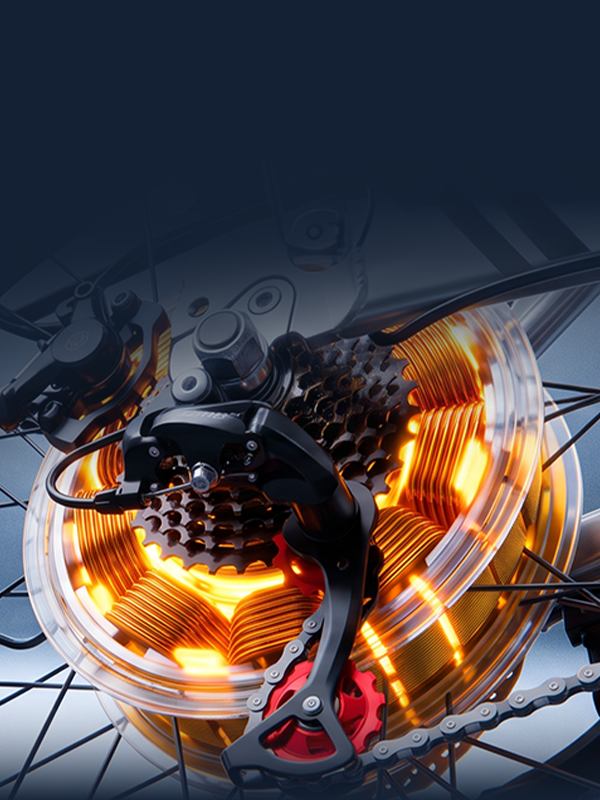
Throttle vs pedal assist is the control choice that shapes how your e-bike feels and how far it goes. A throttle gives you instant power with a twist or button press, no pedaling required. Pedal assist (PAS) kicks in when you pedal, matching your effort with motor support across different levels. Neither system is universally better. The right choice depends on your effort preference, range needs, terrain, local regulations, and whether you want both options on one bike.

Throttle vs Pedal Assist at a Glance
Side-by-Side Comparison Table
Here's what separates throttle mode from pedal assist mode when you're actually riding:
| Factor | Throttle | Pedal Assist |
|---|---|---|
| Activation | Twist grip or thumb button | Starts when you pedal |
| Pedaling Required | No | Yes |
| Acceleration Feel | Instant, direct | Gradual, proportional to your effort |
| Low-Speed Control | Precise at intersections and tight turns | Can surge with cadence sensors, smooth with torque sensors |
| Battery Drain | Higher per mile | Lower per mile |
| Typical Range | 30-40 miles on most systems | 50-100+ miles depending on assist level |
| Exercise Level | None to minimal | Light to moderate depending on assist level |
| Sensor Dependence | None | Cadence sensor (basic) or torque sensor (premium) |
| Accessibility | Works for riders who can't pedal consistently | Requires sustained pedaling motion |
| Hill Performance | Full motor power available from a stop | Strong on torque-sensor systems, can lag on cadence |
| Traffic Starts | Immediate response | Slight delay on cadence systems |
| Legal Class | Class 2 (up to 20 mph) or Class 3 with pedal assist | Class 1 (20 mph) or Class 3 (28 mph) |
| Best Use Case | Stop-and-go traffic, accessibility needs, short trips | Longer commutes, fitness riding, maximum range |
Quick Recommendation
Choose primarily pedal assist if you want maximum range, some exercise, and access to Class 1 trails. Choose primarily throttle if you need zero-effort starts, have mobility limits, or ride short urban routes where range isn't critical. Choose an e-bike with throttle and pedal assist if you want the flexibility to switch modes based on conditions, which is what most riders end up preferring.
How an E-Bike Throttle Works
A throttle gives you motor power on demand. You twist or press, the motor engages, and you move. No pedaling required. It works like a motorcycle or scooter control, where the harder you twist or press, the more power you get. The throttle connects directly to the motor controller, bypassing any pedal sensors entirely.
Thumb, Half-Twist, and Twist Throttles
When you're comparing thumb throttle vs twist throttle, here's what each control feels like:
| Throttle Type | How It Works | Hand Position | Fatigue Factor |
|---|---|---|---|
| Thumb Throttle | Push button or lever with your thumb | Keeps hand flat on grip | Less tiring on long rides |
| Half-Twist Throttle | Rotate about 45° like a motorcycle | Slight wrist rotation | Moderate, easier than full twist |
| Twist Throttle | Full 90° rotation like a dirt bike | Significant wrist turn | Can cause hand fatigue after 30+ minutes |
I see thumb throttles on most commuter bikes now. They're easier to modulate in traffic and don't make your wrist sore after an hour. Twist throttles give you that motorcycle feel if you want it, but your hand will remind you on longer rides.
What the Throttle Feels Like While Riding
When you engage an e-bike throttle, you get immediate motor response. There's no waiting for a sensor to detect pedaling. This makes throttles perfect for pulling away from stoplights, navigating crowded bike paths at walking speed, or getting over curbs and obstacles without momentum.
The power delivery is linear. Light pressure gives you gentle acceleration. Full throttle dumps all available motor power. You're in direct control of the assist, which feels intuitive if you've ridden motorcycles or scooters. The learning curve is about five seconds.
At low speeds (under 8 mph), throttle control is precise. You can creep through tight spaces or hold a steady pace alongside someone walking. At higher speeds, most systems cap throttle assist at 20 mph to meet Class 2 regulations, though some bikes offer higher speeds through pedal assist.
Throttle Benefits and Limitations
Throttle mode gets you moving without pedaling, works when you're exhausted, and gives you full motor power from a dead stop. It's accessible for riders with knee issues, limited stamina, or mobility constraints. Starting on hills is effortless.
The tradeoff is battery consumption. Throttle-only riding drains the pack faster because you're not contributing any pedal power. Expect 30-40 miles of range on most 48V 10-12Ah systems if you ride throttle-only at moderate speeds. Heavy throttle use in stop-and-go traffic or on hills can cut that to 25 miles.
Hand position matters. Thumb throttles are fine for hours. Twist throttles can cause wrist discomfort after 30-45 minutes of continuous use. And because the throttle is always live, accidental engagement while mounting or maneuvering is possible until you learn to be conscious of hand placement.
How Pedal Assist Works
Pedal assist monitors your pedaling and adds motor power automatically. You choose an assist level (1 through 5 or 9, depending on the bike), start pedaling, and the motor amplifies your effort. The higher the assist level, the more power the system adds for each pedal stroke.
Cadence Sensor vs Torque Sensor
The sensor type determines how natural pedal assist feels. This is where cadence sensor vs torque sensor makes a measurable difference:
| Sensor Type | What It Measures | Response Feel | Best For | Ghost Pedaling |
|---|---|---|---|---|
| Cadence Sensor | Whether pedals are rotating | On/off surge when you start | Budget builds, casual riding | Yes, can happen |
| Torque Sensor | How hard you're pushing the pedals | Proportional, smooth ramp-up | Natural riding feel, hills, fitness | Rare |
Cadence sensors detect pedal rotation. Once you complete about a quarter turn, the motor kicks in at the assist level you've set. It feels like a gentle shove from behind, consistent but not matched to your effort. If you're barely spinning the pedals, you still get full assist for that level. This can feel disconnected on technical terrain or when you want precise control.
Torque sensors measure the force you apply to the pedals. Push harder, get more assist. Ease off, the motor backs down. The response is immediate and proportional. It feels like your legs got stronger rather than like a robot is pushing you. Torque sensors cost more and show up on bikes starting around $1,200. They're worth it if you ride often or tackle varied terrain.
Ghost pedaling is when you barely turn the cranks and the motor does all the work. Cadence sensors allow this. Torque sensors mostly prevent it by requiring real pedal pressure to deliver assist. Some riders love ghost pedaling for effortless cruising. Others find it makes the bike feel numb and disconnected.
Pedal Assist Levels and Power Delivery
Most e-bikes offer 3-9 pedal assist levels. Level 1 gives you minimal support, maybe 30-50% of the motor's available power. Level 5 (or 9) dumps close to 100% assistance, making even steep climbs feel flat.
Lower assist levels extend range dramatically. I get 80+ miles on level 1 or 2 on a 48V 12Ah battery. Crank it to level 5 and that drops to 40-50 miles because the motor is working harder even when you're not.
Switching levels mid-ride is instant on most systems. You tap up or down on the display or handlebar controller, and the next pedal stroke reflects the change. I drop to level 1 or 2 on flats and bump to 4 or 5 when I see a hill or need to hit 28 mph to keep pace with traffic.
Pedal Assist Benefits and Limitations
Pedal assist gives you range. Even on high assist, you're contributing effort, which means the battery lasts longer than throttle-only riding. You get exercise without the suffer factor. And because you're pedaling, the system feels more like an assisted bicycle than an electric scooter.
The limitation is the delay. Cadence sensors need a quarter to half pedal rotation before assist kicks in. That lag is noticeable when you're starting from a dead stop at a light or pulling onto a busy road. Torque sensors respond faster but still aren't instant like a throttle.
At very low speeds (under 5 mph), cadence-based pedal assist can feel jerky. The motor wants to push you forward, but you're trying to stay slow. Torque sensors handle this better by scaling assist to your pressure, but even they aren't as smooth as throttle control when you need to creep through a crowded area.
If you stop pedaling, the assist cuts out within 1-2 seconds. That's great for control and safety, but it means you can't coast and still get power. You're always pedaling, even if lightly.
Throttle vs Pedal Assist: Range, Control, and Exercise
Battery Use and Range
Throttle e-bike range is lower because the motor does 100% of the work. On a typical 48V 10-13Ah battery (around 500-650Wh), expect 30-40 miles of throttle-only range at moderate speeds (15-18 mph) on flat terrain with a 170-200 lb rider. Add hills, wind, or a heavier rider, and that drops to 25-35 miles.
Pedal assist range stretches farther. On the same battery at mid-level assist (level 3 of 5), you'll get 50-70 miles. Drop to level 1 or 2, and 80-100 miles is realistic. The motor contributes less power per mile because you're adding pedal input.
The difference comes down to Wh per mile. Throttle-only riding consumes 15-20 Wh/mi. Mid-level pedal assist uses 8-12 Wh/mi. Low assist can drop to 5-8 Wh/mi. Those numbers shift with speed, load, and terrain, but the ratio holds: pedal assist always extends range compared to throttle because you're sharing the work.
Your riding style matters more than the spec sheet. Aggressive throttle use (full power, frequent starts) can drain a battery in 20 miles. Conservative pedal assist (levels 1-2, steady pace) can push past 100 miles. Most riders mix modes and land somewhere in the middle.
Acceleration and Low-Speed Control
Throttle gives you instant acceleration from zero. Twist or press, and the motor engages within a tenth of a second. This makes pulling into traffic from a side street or starting on a steep hill effortless. There's no pedal delay, no awkward half-rotation before assist kicks in.
Cadence-based pedal assist has a lag. You need to complete about a quarter turn of the cranks before the sensor registers movement and engages the motor. On flat ground, that lag is barely noticeable. At a stoplight on a 6% grade with traffic behind you, those two seconds feel long. Torque sensors cut the delay to under half a second because they respond to pressure, not rotation, but they're still not instant.
At walking speed (3-5 mph), throttle control is smooth and precise. You can modulate power with thumb or wrist pressure and hold a steady pace next to someone on foot. Cadence-based pedal assist struggles here because the motor wants to push you forward once it detects pedaling, making slow-speed maneuvering feel jerky. Torque sensors handle low speeds better by scaling assist to your actual effort.
For tight turns, parking, or navigating crowded areas, throttle wins. You have direct control over power delivery without worrying about pedal position or sensor lag. For open-road riding at 15+ mph, the difference disappears. Pedal assist feels natural and connected once you're up to speed.
Exercise, Fatigue, and Accessibility
Pedal assist gives you a workout. Even on high assist, you're pedaling, which means your legs, core, and cardiovascular system are engaged. Drop to level 1 or 2, and the effort level matches casual cycling. It's enough to get your heart rate up without arriving at work sweaty.
Throttle-only riding eliminates exercise. You're sitting on the saddle, steering and braking, but your legs aren't doing meaningful work. That's fine for short trips, grocery runs, or days when you're exhausted. It's also the right choice for riders with joint pain, limited mobility, or conditions that make sustained pedaling difficult.
Fatigue is where hand position enters the picture. Thumb throttles are comfortable for long rides because your hand stays in a natural position. Twist throttles require wrist rotation, which can cause discomfort after 30-45 minutes of continuous use. Pedal assist eliminates hand fatigue entirely because the motor responds to your pedaling, not a hand control.
For riders with knee issues, pedal assist on high levels reduces joint stress compared to unpowered cycling while still keeping the legs moving. Throttle removes joint load completely but also removes the movement, which might not be ideal if your goal is maintaining mobility.
Same-Bike Throttle vs Pedal Assist Test
I don't have controlled Actbest test data comparing throttle-only versus pedal-assist range on the same bike under identical conditions. Without documented results from the product or testing team, I can't present specific distance or battery-consumption numbers as original findings.
What I can tell you is how these modes behave in real-world use based on verified product specs and what any rider would observe.
Controlled Test Method
If Actbest were to run a controlled throttle vs pedal assist range test, the methodology would need to lock down these variables:
| Variable | Control Requirement |
|---|---|
| Bike Model | Same Actbest model, same battery capacity, same motor |
| Rider + System Weight | Identical total load (rider, bike, cargo) |
| Route | Same path, same elevation change, same surface |
| Weather | Same temperature, wind, humidity |
| Tire Pressure | Verified and matched before each run |
| Battery State | Fully charged, same age and health |
| Target Speed | Same average speed (e.g., 18 mph) |
| Stops | Same number and duration |
| Data Recording | Wh consumed, distance, time, assist level or throttle position |
Results Table
Without live test data, here's what manufacturer-rated ranges from Actbest product pages show:
Take the Actbest Core ST 2.0 as an example. It uses a 48V 10.4Ah battery (around 500Wh), a peak 1200W motor, and 26" x 2.1" tires:
| Mode | Manufacturer-Rated Range | Notes |
|---|---|---|
| Throttle-Only | Up to 40 miles | At moderate speed, flat terrain, ~170 lb rider |
| Pedal Assist (PAS) | Up to 55 miles | Mixed assist levels, same conditions |
The Actbest Core 2.0 Plus with its 48V 12Ah battery (576Wh) and torque sensor extends that gap:
| Mode | Manufacturer-Rated Range | Notes |
|---|---|---|
| Throttle-Only | Not separately rated | Estimated 45-50 miles based on battery capacity |
| Pedal Assist (PAS) | Up to 100 miles | Torque sensor efficiency + rider input |
These are manufacturer ratings under ideal conditions. Real-world range drops with hills, headwinds, cold weather, aggressive acceleration, or a heavier rider.
What the Results Mean for Real Riders
The range gap between throttle and pedal assist is consistent: pedal assist gives you 30-50% more miles from the same battery. That gap widens if you ride conservatively on low assist levels (1-2) and narrows if you use high assist (4-5) constantly.
For commutes under 15 miles round-trip, throttle range is plenty. You'll get home with battery to spare. For 20-30 mile daily rides, pedal assist keeps you from range anxiety. And if you're planning 40+ mile routes, pedal assist on low to mid levels is the only realistic choice unless you're carrying a spare battery.
Hills amplify the difference. Throttle-only climbing drains the battery fast because the motor is working against gravity with no help from your legs. Pedal assist on even mid-level settings spreads the load, extending range significantly on hilly routes.
Rider weight and cargo matter more with throttle because the motor is doing all the work. A 200 lb rider with 20 lbs of cargo will see throttle range drop 20-30% compared to a 150 lb rider with no load. Pedal assist cushions that impact because you're contributing power.
Actbest Throttle and Pedal-Assist Model Matrix
Compare Current Actbest Control Systems
Here's how Actbest's current lineup stacks up by control system, sensor type, and range:
| Model | Throttle Type | Sensor Type | Assist Levels | Riding Modes | E-Bike Class | Motor (Peak) | Battery | Throttle Range | PAS Range | Best Use Case |
|---|---|---|---|---|---|---|---|---|---|---|
| Core ST 2.0 | Thumb | Cadence | 5 | Manual, PAS, Throttle | Class 3 | 1200W | 48V 10.4Ah | Up to 40 mi | Up to 55 mi | Budget commuter, step-through frame, mixed-mode riding |
| Core 2.0 | Thumb | Cadence | 5 | Manual, PAS, Throttle | Class 3 | 1200W | 48V 10.4Ah | Up to 40 mi | Up to 55 mi | Budget commuter, step-over frame, urban riding |
| Core 2.0 Plus | Thumb | Torque | Multiple | Manual, PAS, Throttle | Class 3 | 1200W | 48V 12Ah | Not separately rated | Up to 100 mi | Premium commuter, natural pedal feel, longer range |
| Core ST 2.0 Plus | Thumb | Torque | Multiple | Manual, PAS, Throttle | Class 3 | 1200W | 48V 12Ah | Not separately rated | Up to 100 mi | Premium step-through, torque sensor smoothness, max range |
| Mars Folding | Thumb | Cadence | Multiple | Manual, PAS, Throttle | Class 3 | 1200W | 48V 13.5Ah | 30-40 mi (estimated) | Up to 65 mi | Folding commuter, portability, mixed terrain |

All current Actbest models offer both throttle and pedal assist, giving you the flexibility to switch modes based on conditions. The Core 2.0 Plus and Core ST 2.0 Plus stand out with torque sensors, delivering smoother, more natural pedal assist at the cost of a higher price point.
Which Actbest Control Setup Fits Which Rider?
Daily commuters (10-20 miles round-trip): Core ST 2.0 or Core 2.0 with cadence sensor gives you throttle for traffic starts and enough pedal assist range to get home without charging mid-day. The 55-mile PAS range covers most urban commutes with room to spare.
Riders who want natural pedal feel: Core 2.0 Plus or Core ST 2.0 Plus with torque sensor. The proportional assist response feels like riding a traditional bike with stronger legs rather than a motor pushing you. If you're coming from road cycling or touring, this is the control setup that won't annoy you.
Folding and portability needs: Mars Folding offers both control modes plus a compact frame. The 13.5Ah battery gives you 65 miles of PAS range, which is enough for multi-day trips without daily charging if you're conservative with assist levels.
Mixed-mode riders: Any current Actbest e-bike with throttle and pedal assist lets you throttle through intersections and switch to pedal assist for open roads. This is how most riders actually use these bikes, regardless of which mode they thought they'd prefer when they bought it.
Which Mode Is Better for Your Riding Situation?
Commuting and Stop-and-Go Traffic
Throttle dominates in stop-and-go traffic. You're pulling away from lights, dodging cars, and navigating intersections every few blocks. The instant response of a thumb throttle beats waiting for pedal assist to kick in. You stay focused on traffic instead of thinking about crank position.
Pedal assist works fine once you're moving, but that startup lag gets old after the tenth red light. If your commute is more stop than go, having throttle available (even if you use pedal assist most of the time) makes the ride less frustrating.
Best setup: e-bike with throttle and pedal assist. Use throttle for starts and low-speed maneuvering, switch to pedal assist once you're up to speed.
Hills and Standing Starts
Throttle gets you moving on steep grades from a dead stop. There's no awkward moment where you're trying to balance, clip in, and generate enough pedal rotation to trigger assist. You hit the throttle, the bike moves, and you're stable within a second.
Pedal assist on torque-sensor systems handles hills well once you're moving because the motor responds to your effort. Cadence sensors are less confidence-inspiring because the assist delay means you need momentum before the motor kicks in. Starting mid-climb on a cadence bike without throttle requires either strong legs or good balance while you wait for assist.
Best setup: Torque-sensor pedal assist with throttle backup. Use pedal assist for sustained climbing, throttle for the first few feet when you need instant power.
Fitness and Long-Distance Riding
Pedal assist keeps you moving for 60, 80, 100+ miles if you manage assist levels. Even on high assist, you're burning calories and getting cardiovascular benefit. The range advantage over throttle is massive on long rides.
Throttle-only riding caps you at 30-40 miles on most batteries and gives you zero exercise. That's fine for errands but not for fitness-focused or distance riding. You'll run out of battery before you cover serious miles.
Best setup: Torque-sensor pedal assist on low to mid levels. Save throttle for the occasional steep pitch or when you're genuinely exhausted and just need to get home.
Limited Mobility and Comfort Priorities
Throttle is the accessible choice. If sustained pedaling causes pain, limits your range of motion, or exhausts you quickly, throttle lets you ride without that barrier. You control speed and power with hand pressure alone.
Pedal assist requires continuous pedaling motion, even if the motor is doing most of the work. That's still movement and joint loading, which might not work for riders with certain mobility constraints. High-assist pedal assist reduces effort but doesn't eliminate it.
Best setup: Throttle-primary riding with pedal assist available for when you want light exercise or need to extend range on longer trips.
Safety and Legal Differences
Control Habits That Reduce Risk
Throttle safety starts with awareness. The control is always live when the bike is powered on. Keep your hand clear of the throttle when mounting, dismounting, or walking the bike. Accidental engagement can jerk the bike forward or cause you to lose balance.
Start on low assist or throttle at low power when you're new to the bike. Full-power starts are thrilling but harder to control until you've learned the bike's weight and handling. Practice throttle modulation in an empty parking lot before taking it into traffic.
Pedal assist safety comes down to knowing when assist will cut out. Stop pedaling, and the motor stops within 1-2 seconds. That lag can surprise you if you're coasting through a turn and suddenly lose power assistance. Keep light pedal pressure through corners and intersections so assist stays active.
Both systems should have brake cutoffs that kill motor power the instant you pull a brake lever. Verify this works before your first ride. Squeeze each brake and confirm the motor cuts out immediately. If it doesn't, do not ride the bike until that's fixed.
For intersection starts, look over your shoulder before you accelerate. Throttle acceleration is fast enough to surprise drivers who aren't expecting bike-speed takeoffs. Pedal assist is gentler but can still close gaps quickly on high assist levels.
Check your assist level or throttle position before starting. Launching in level 5 or full throttle when you meant to creep forward at level 1 is jarring and unsafe in tight spaces.
Class 1, Class 2, and Local Rules
E-bike classifications affect where you can ride:
| Class | Top Speed | Throttle Allowed | Pedal Assist | Typical Access |
|---|---|---|---|---|
| Class 1 | 20 mph | No | Yes | Bike paths, most trails, parks |
| Class 2 | 20 mph | Yes (throttle-only or with pedal assist) | Optional | Most bike paths, some trails (varies locally) |
| Class 3 | 28 mph | Varies by state | Yes | Roads, bike lanes, limited trail access |
Class 2 e-bikes (with throttle) face more restrictions than Class 1 (pedal-assist only) in some jurisdictions. Certain bike paths, greenways, and national park trails ban Class 2 bikes but allow Class 1. Check local regulations before you buy if trail access matters. (Learn more about e-bike classes 1, 2, and 3.)
Class 3 bikes hit 28 mph with pedal assist, which is fast enough to keep pace with city traffic. Some states allow throttles on Class 3 bikes; others restrict them to 20 mph throttle + 28 mph pedal assist. State, local, and land-manager rules vary. Do not assume the three-class framework covers every scenario.
If you ride a bike with both throttle and pedal assist, you're legally riding a Class 2 bike in most jurisdictions, even if you never use the throttle. That classification is based on the bike's capability, not how you ride it.
Pre-Ride Control Check
Before every ride, verify:
- Throttle position: Make sure the throttle isn't twisted or pressed before you power on the bike.
- Assist level: Confirm you're starting in the assist level you want (usually level 1 or 2 for safe starts).
- Brake cutoffs: Squeeze each brake lever and confirm the motor cuts power immediately.
- Display function: Check that speed, battery, and assist level are displaying correctly.
- Battery charge: Verify you have enough charge for your planned ride, especially if using throttle mode.
This takes 15 seconds and prevents the two most common control issues: accidental high-power starts and discovering mid-ride that your brakes don't cut motor power.
Simple Decision Framework
Use these six questions to figure out whether you want throttle-first, pedal-assist-first, or both:
1. Do you want exercise from your rides?
Yes → Pedal assist. No → Throttle or both.
2. How far do you typically ride?
Under 15 miles → Either works. 15-40 miles → Pedal assist extends range. 40+ miles → Pedal assist on low levels is essential unless you carry spare batteries.
3. How many stops and starts per ride?
Frequent stops (urban, stop-and-go) → Throttle for starts. Open roads, few stops → Pedal assist is fine.
4. Do you prefer instant power or gradual assistance?
Instant → Throttle. Gradual, natural feel → Pedal assist, especially torque sensor.
5. Any mobility or joint concerns?
Yes → Throttle. No → Pedal assist with throttle backup.
6. Where will you ride?
Trails and bike paths → Check local rules; Class 1 (pedal-assist-only) has broader access. Roads and bike lanes → Either works; Class 2 (with throttle) is usually fine.
If you answered a mix of throttle and pedal assist preferences, buy an e-bike with throttle and pedal assist. Most riders use both modes depending on conditions, regardless of which one they thought they'd prefer when shopping.
Frequently Asked Questions
Can an e-bike have both pedal assist and throttle?
Yes. Most e-bikes sold in the US include both systems. You can switch between them during the ride, using throttle for starts and low-speed control and pedal assist for range and exercise.
Does a throttle drain the battery faster?
Yes. Throttle-only riding uses 15-20 Wh per mile because the motor does all the work. Pedal assist uses 8-12 Wh per mile on mid-level settings because you're contributing effort. The battery drains 30-50% faster on throttle compared to pedal assist.
Is pedal assist better for exercise?
Yes. Even on high assist, you're pedaling and engaging your legs and cardiovascular system. Throttle eliminates exercise entirely. If fitness is a goal, use pedal assist on low to mid levels.
Can I add a throttle to a pedal-assist bike?
Sometimes, but it's not recommended. Adding a throttle requires controller compatibility, proper wiring, and potentially changes your bike's legal classification from Class 1 to Class 2. It might also void your warranty. Check with the manufacturer before modifying.
Which is better for hills?
Throttle gives you instant power from a stop, which is useful for starting on steep grades. Torque-sensor pedal assist delivers strong, proportional power once you're moving. For sustained climbing, pedal assist conserves battery better. Ideal setup: both, so you can throttle for the start and switch to pedal assist for the climb.
Are throttle e-bikes legal everywhere?
No. Class 2 e-bikes (with throttle) face restrictions on some bike paths, greenways, and trails where Class 1 (pedal-assist only) bikes are allowed. Road and bike lane access is generally fine. State, local, and land-manager rules vary, so check regulations in your area.
Is a torque sensor better than a cadence sensor?
For most riders, yes. Torque sensors deliver smoother, more natural pedal assist that scales with your effort. Cadence sensors are cheaper and work fine for casual riding but feel less connected and can cause jerky starts. If you ride often or want a bike that feels like a traditional bicycle, torque sensors are worth the extra cost.
Final Verdict
Throttle vs pedal assist isn't a binary choice for most riders. Throttle gives you instant power and accessibility. Pedal assist gives you range and exercise. The bikes that sell best offer both, because most people want the flexibility to switch modes based on conditions.
If you're commuting in stop-and-go traffic, dealing with hills, or need zero-effort starts for mobility reasons, throttle is essential. If you're riding 30+ miles, want fitness benefits, or need access to Class 1 trails, pedal assist is the better default mode.
The setup I'd recommend for most riders: an e-bike with throttle and pedal assist, ideally with a torque sensor for smooth, natural pedal feel. Use throttle for starts and low-speed maneuvering. Use pedal assist on low to mid levels for open-road cruising and maximum range. Use high assist when you hit hills or headwinds. You'll figure out your own mix within the first week, and it'll probably shift based on the day, the weather, and how tired you are.
Check out Actbest's current lineup to compare throttle types, sensor systems, and control modes across different frame styles and price points. Every current model offers both control systems, so you're not locked into one mode or the other.
Share:
Where Can You Ride an E-Bike? Roads, Trails, and Public Land
Electric Bike Laws by State: Classes, Licensing, Registration, and Where You Can Ride