
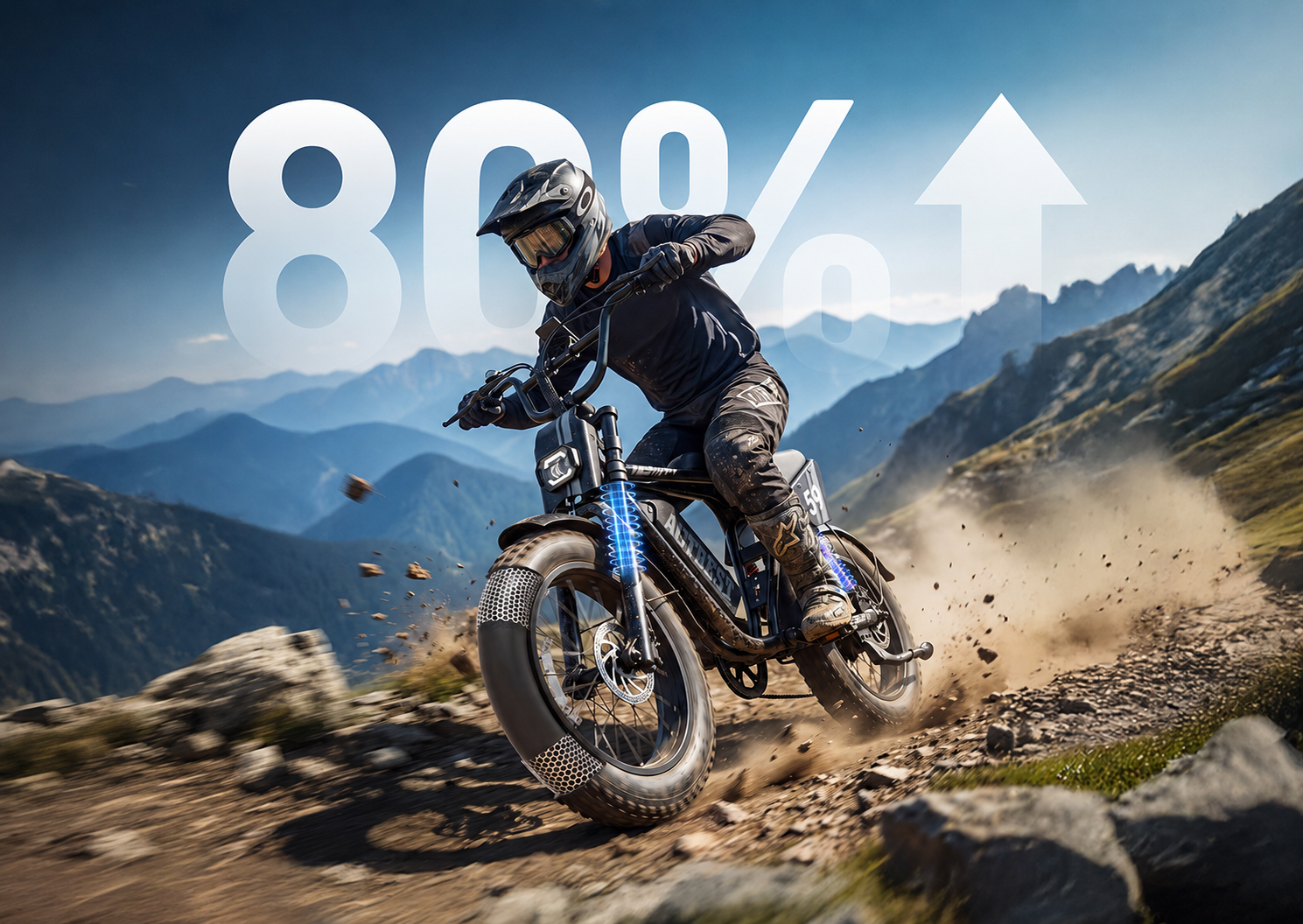
Full suspension sounds like one of those upgrades that's nice to have but not essential. On a moped-style ebike, it's more than that for a lot of riders, but it's not necessary for everyone. Whether or not you need full suspension depends on your roads, your route length, and how much you weigh on top of the bike.
This guide covers what full suspension is, when it's needed, and when you can make do without.
Quick Answer
Full suspension on a moped-style ebike is worth it if you're often riding on rough pavement, through potholes, on gravel, on longer commutes, or carrying extra weight, and you want more comfort and better traction. It's not so important if your rides are short and mostly on flat, even roads, or if keeping the price down is your priority. Suspension quality matters too. A cheap, poorly built suspension system can feel worse than a simple, well-built front fork with no rear shocks at all.
Suspension isn't the only thing that affects the comfort of your ebike, either. Tires, seat, frame geometry, and brakes all work together with suspension as one system to take the harshness out of riding rough surfaces and long distances. The main drawbacks of full suspension are that it adds weight, slightly reduces efficiency, and requires a bit more maintenance.
What Full Suspension Does
A front fork with suspension absorbs impact before it reaches your hands and arms. When you hit a pothole or a crack in the road, the fork compresses instead of sending that jolt straight up through the handlebars. This is pretty noticeable on a moped-style ebike, where the riding position often has more of your body weight resting through the bars than on a road bike.
A rear shock does the same job for the rear wheel, your seat, and the rest of the frame. Without them, every bump under the rear wheel goes straight into the base of your spine, which becomes tiring over a long ride.
Full suspension also helps with traction, which is why you see it on higher-end mountain bikes. Suspension keeps your tires in contact with the ground more consistently over uneven surfaces. A rigid frame can bounce a tire off the ground for a split second on a rough patch, which briefly costs you grip right when you might need it for braking or steering. Suspension smooths that out, so the tire stays planted and doing its job, rather than skipping across the surface and losing contact at the worst possible moment.
When it comes to full suspension, the front suspension handles steering feel and impacts you'd otherwise feel through your hands. The rear suspension handles seated comfort and keeps the rear wheel properly tracking the ground. A bike with only front suspension still leaves the rear wheel and your lower back to deal with impacts that the front fork never touches.
Benefits for Moped-Style Riders
Potholes can be a real annoyance, and moped-style ebikes are heavier and ridden at higher speeds than a standard bicycle. So hitting a pothole hits you harder than it would on a lighter, slower bike. Full suspension takes a lot of that sting out, and it's the difference most riders notice first when they switch from a rigid or hardtail to a full-suspension bike.
The long bench seat on these bikes is comfortable, but it doesn't do much on its own to absorb impact. A soft, well-padded seat feels great when you're stationary, but it can't do what a properly working rear shock does once you're moving over rough ground.
Gravel and loose surfaces are where full suspension really shines. Keeping the rear wheel connected to the ground on a loose or bumpy gravel path gives you noticeably more control than a rigid rear end would, particularly when you're cornering or braking. A rear wheel that skips and hops on loose ground loses traction at exactly the moments you need it most.
The way full suspension reduces fatigue on long rides is another benefit. A commute that leaves you stiff and sore after 20 minutes on a hardtail can feel completely different on a full-suspension bike over the same distance and the same roads. You'll certainly notice the difference at the end of a long week of daily commuting, when the cumulative effect of a hundred small impacts either has or hasn't taken a toll on your back and shoulders.
If you're a heavier rider, you'll also get more out of full suspension, since more weight means more force going through every bump. A 220 lb rider hitting the same pothole as a 150 lb rider experiences a bigger impact, and suspension absorbs more of that difference than a rigid frame ever could.
And suspension helps you if you're the kind of rider who wants confidence on rougher terrain. Knowing the bike will absorb what's coming rather than transmit it straight to you changes how you ride, not just how comfortable you feel.
Trade-Offs and Maintenance
As with most things in life, there are compromises with a full-suspension electric bike. The extra components of full suspension add weight to the bike, which can be a pain when you're carrying it upstairs, loading it into a car, or just maneuvering it at a stop. It also pushes the price up compared to a front-suspension or hardtail model with a similar motor and battery, as there are more engineering and complex parts involved.
There's more to look after, too. A full-suspension bike has more moving parts than a hardtail or rigid one, and each of those parts can eventually wear out, squeak, or need attention. Pivot points, bushings, and shock seals are all things you don't have to worry about with a hardtail.
It's important to be realistic here, as a poorly built suspension system can end up worse than no rear suspension at all. You can buy electric bikes with cheap shocks that can feel vague, wallow under load, or develop squeaks and play within months. If you're comparing two bikes and one has full suspension but feels flimsy, a simpler, well-built hard-tail bike might ride better and last longer.
If you have a full-suspension electric bike, a suspension check should be a part of your maintenance habits. Check the fork for even compression with no clicking or grinding. Push down on the rear of the bike and listen for any squeaks or knocks from the shock or pivot points. Look at the brake cable and hose routing near the rear shock, since suspension movement can wear through a poorly routed cable over time if it's not accounted for in the frame design. None of this takes long, and catching a problem early is a lot cheaper than replacing a worn-out shock later. Also, pay attention to any new noises or changes in suspension performance while riding. Don't ignore them, as you might be able to catch a minor problem before it turns serious.
Full Suspension vs Fat Tires vs Comfort Seat
There are a couple of alternatives to suspension, which is good to know, as they might be all you need, and they can save you money and hassle.
The first alternative is fat tires, which absorb some vibration on their own, especially when run at lower pressure. Dropping tire pressure a little increases comfort and grip, but it also increases rolling resistance, which costs you a bit of range.
A comfort seat helps distribute pressure while you're sitting still or moving slowly. But it does very little for the sharp, sudden impacts that suspension is built to handle.
Some electric bikes have a soft seat on a rigid frame, but this still transmits most of the shock you get when you ride into a pothole through to you. It just changes how that impact feels on initial contact, not how much of it reaches you overall.
Suspension is the only one of the three that controls wheel movement independently of the frame, which isolates you from bumps rather than just cushioning the seat you're sitting on. Fat tires and a good seat both help, but they're supporting players. Suspension is most effective when you're riding on rough terrain.
actbest Comfort Tiers
The actbest Blaze uses a quad-spring suspension system with dual-crown front suspension and a dual-spring rear, providing a properly comfortable ride for a compact 16-inch frame. It's a good choice if your commute mixes decent roads with the occasional rough patch, without needing to step up to a heavier, more expensive model.
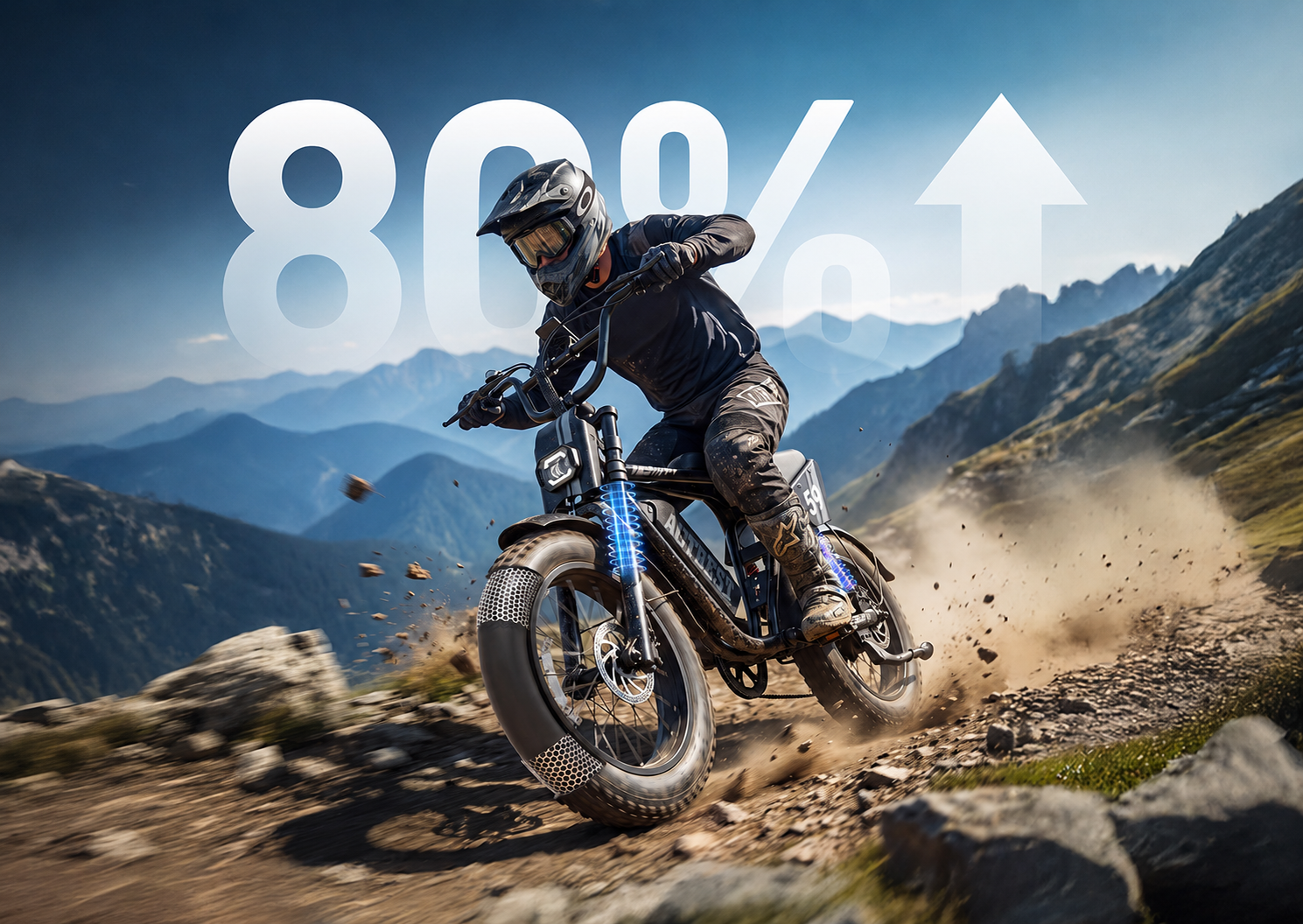
The actbest Striker Plus goes further, with a hydraulic suspension front fork and dual rear shock absorbers built for all-terrain comfort. If your route regularly includes rough pavement, gravel, or tiring longer rides, the Striker Plus's suspension system is built to handle that kind of riding.
Neither is automatically the right pick. If your commute is short and mostly flat, the Blaze is perfectly good for what you need without paying for weight and complexity you won't use. If the roads on your regular routes are rougher or your rides longer, the full suspension on the Striker Plus will benefit you more.
Browse the full moped style ebike range at actbest to compare suspension setups and find the right fit for your roads.
FAQ
Is full suspension better than front suspension?
For rough or longer rides, yes, since it protects your seat, lower back, and hands and arms. For shorter rides on flat, even roads, front suspension alone is often enough, keeping the bike lighter and cheaper.
Does full suspension reduce range?
Indirectly, yes. Full suspension adds weight to the bike, and more weight means the motor works a little harder to move it, which can shave a small amount off your range. The effect is quite small compared to the reduction in range caused by terrain and rider weight.
Do fat tires make suspension unnecessary?
No. Fat tires absorb some vibration, especially when you run them at lower pressure. They don't control wheel movement the way suspension does. When a bike has both, the two work together to create a more comfortable ride.
How often should suspension be checked?
A quick visual and functional check before regular rides is a good habit: feel for even compression and listen for noise. A more thorough inspection, including pivot points and shock seals, is a good idea to do now and again.
Share:
Moped Style Ebike vs Electric Moped vs Electric Scooter
Peak Watts vs Nominal Watts on Moped Style Ebikes