
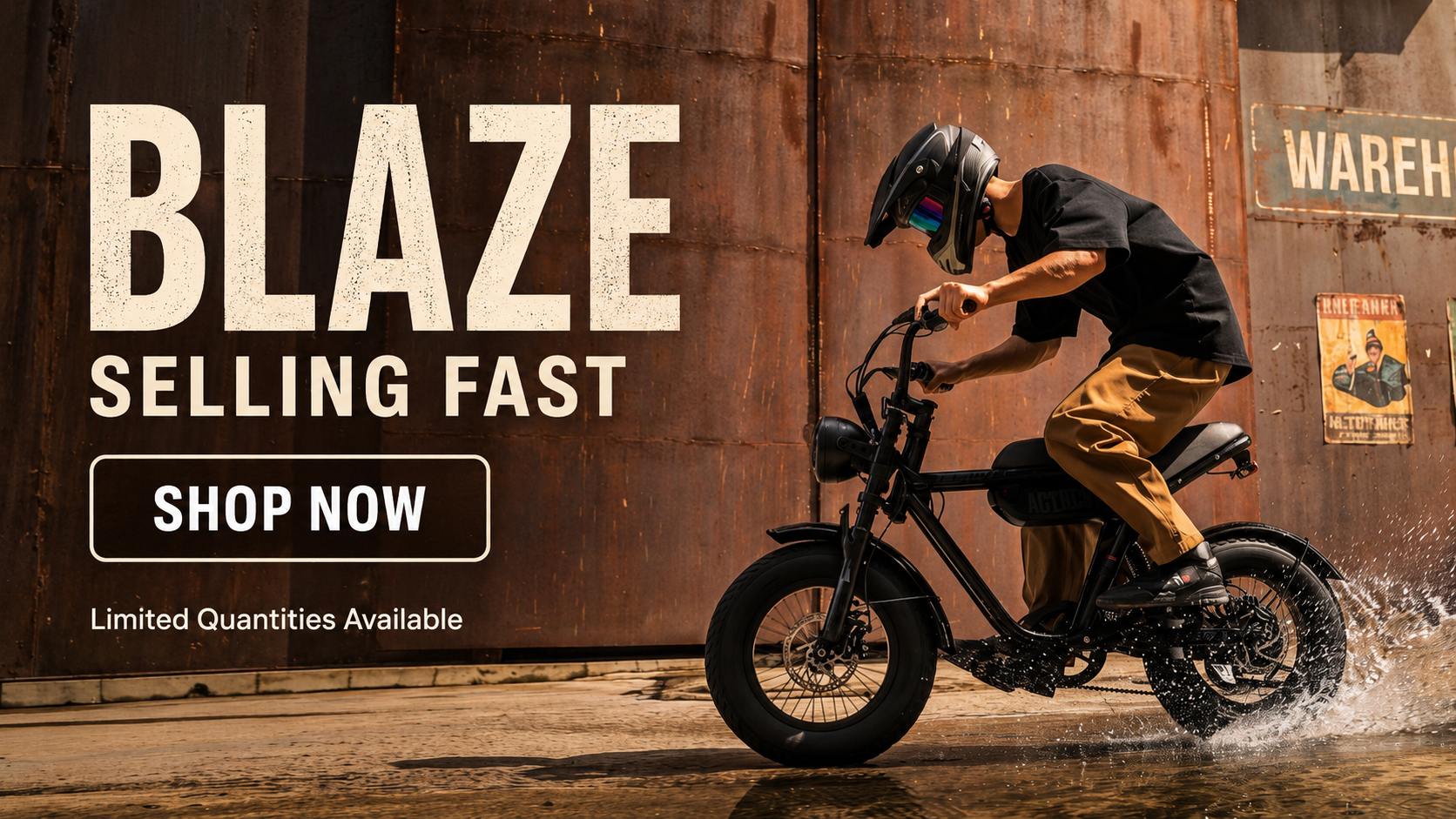
As with any type of vehicle, no moped-style ebike is automatically suitable or safe for every teen. There are a lot of variables to contend with to make the right choice for your specific teenager. Things like their maturity, their regular route, their experience on two wheels, and how well they stick to the rules when nobody's watching all need consideration. This guide is here to help you work through those questions properly, not to sell you on the fastest-looking bike in the range.

Quick Answer for Parents
There's no single "safest" moped-style e-bike that suits every teenager. The specification of the bike is important, but not as much as how the bike fits your teen's size, if the brakes are predictable and easy to reach, and if the route to school or a friend's house is one you'd be comfortable with them riding. You also need them to show they'll wear a helmet and follow the rules without you standing over them.
Battery safety matters too, so look for electric bikes with proper battery certification and buy from a brand with a track record. The cheapest bike you find might not be from a reputable brand known for safe, high-quality products.
You also need to check the ebike class rules in your state and your teen's school policy before you buy any electric bike. Once you've chosen a bike, plan supervised practice sessions before your teen rides on their own.
Should a Teen Ride One?
This is worth thinking about deeply before you compare electric bike models. A moped-style ebike is heavier and more powerful than a regular bicycle, and it can reach speeds that most teens haven't had to manage before on two wheels. That combination asks more of a rider than a standard bike does, both physically and in terms of judgment.
You really need to consider the maturity of your teen before allowing them to ride one of these bikes. Two 15-year-olds can have very different levels of traffic awareness, impulse control, and judgment under pressure. Think about whether your teen checks their phone while walking, if they've shown they can follow rules when their friends are around, and if they've had enough experience on a bicycle to read traffic and react to it. None of these are things a spec sheet or review can tell you, and they matter far more than which model you end up choosing.
Traffic awareness is one of those skills that develops over time. It's worth being realistic about your teen's current road sense and if they are willing to learn. A teenager who's confident cycling on quiet residential streets may not be ready to merge into traffic at 25 mph on a heavier, faster machine.
Going from a regular bicycle to a moped-style ebike is a bigger jump than it might look from the outside, and it's worth treating it as a significant step up rather than a simple swap.
Night riding is a separate conversation entirely. Even with good lights, electric bikes are harder for drivers to see after dark, and reaction times matter more when visibility is reduced. If your teen wants to ride at night or in low-light conditions, it's worth setting clear expectations upfront about when riding after dark is acceptable and when it isn't.
Peer pressure is worth thinking about, too. A moped-style e-bike can attract attention from friends who want a turn, a race, or a passenger. It's worth talking through those scenarios with your teen before they happen, not after. Teens often make different decisions in front of friends than they would alone, and a bike capable of high speed raises the stakes on those decisions considerably.
If your teen is younger, less experienced, or you're not confident they'll stick to agreed-upon rules yet, a standard ebike with a lower top speed, or simply more time on a regular bicycle first, is a reasonable place to start. There's no rule that says a moped-style ebike has to be the first step, and waiting a year or building up experience on something less powerful first is often the more sensible path.
Legal and School Rule Checklist
Before you buy your teen a moped-style electric bike, work through these 3 steps.
- The first thing to do is check your state's ebike class rules and any age restrictions that apply. Class 1, 2, and 3 ebikes are treated differently under most states' laws, and some states set minimum ages for the higher-speed classes. Moped-style ebikes are often at the upper end of these classifications because of their speed. This is why it's worth confirming exactly where the model you're considering falls before you buy it. Rules vary considerably from state to state, so check your specific state rather than assuming everywhere is the same, and don't rely on what a friend in another state has told you about their own rules.
- Always check local restrictions on where the bike can be ridden. You will find that some cities restrict ebikes on certain trails, parks, or sidewalks, and these rules can differ from the state-level class rules. So, a bike that's perfectly legal to own and ride on the road might still be restricted on a specific bike path or in a local park.
- Contact your teen's school directly about their policy rather than assuming one exists or guessing at it. Ask about whether e-bikes are permitted on campus at all, where they can be parked or locked securely. Things like secure storage available during the school day, if charging is allowed, and if there are specific rules around speed or where students can ride on school grounds are all important. Some schools have detailed, published policies on this. Others have never had to think about it and will appreciate you raising the question directly. Policies vary a lot between schools, and it's better to know before your teen shows up on a new bike than to find out after there's a problem.
Fit and Control
A bike that's too big or too powerful for your teen to manage confidently is riskier than one with a lower top speed. Check the following before you commit to buying a specific bike:
- Can your teen start, stop, turn, and dismount the bike confidently? To test this, let them try a bike in a quiet car park or empty space, before riding on any road.
- Can they manage the bike's weight without power assistance? For example, if the battery is low or they need to walk it. This is because moped-style ebikes are heavier than standard bicycles, and a teen who can't comfortably handle that will struggle in certain situations.
- Is the brake reach and handlebar reach suitable for your teen's hand size and height? A brake lever that's a stretch to reach properly is a real problem in an emergency stop. And check that your teen has good visibility over traffic from the riding position, since some moped-style frames sit lower or more reclined than a standard bike.
Safety Features Parents Should Prioritize
Your teen needs to know that a helmet is non-negotiable. When buying a helmet, it's worth spending a bit more for one that fits well and that your teen will wear without being nagged every time. A poorly fitted helmet, too loose, too tight, or simply uncomfortable, tends to end up sitting in a drawer more often than on a head.
Lights
Lights, front and rear, and reflectors are essential for visibility, especially if there's any chance of dusk or evening riding. A horn or bell is a small thing, but a useful one for alerting pedestrians or other riders.
Brakes and Tires
Check brake quality specifically, as this is one of the areas where cheaper bikes cut corners, which might not be obvious at first. Hydraulic disc brakes generally give more consistent stopping power with less hand effort than mechanical ones, which is better if your teen doesn't have a particularly strong hand grip yet. When comparing electric bikes, pay close attention to the brakes rather than assuming brakes perform similarly.
Tires are important because tire quality and width affect stability, particularly on uneven surfaces or in wet weather. Wider fat tires generally give more confidence and grip, which matters more for a newer rider still building experience or someone who's been away from cycling for a while and just getting back into it.
Battery Certification
Poorly built batteries can pose a safety issue. So, look for battery certification, which is easy to overlook when you're focused on range and speed, but it matters just as much for a teen's bike as it does for any other ebike.
Understand Speed Settings
Some moped-style ebikes let you limit the top speed in a lower mode, which is a useful feature to use while your teen gains experience, even if the bike is capable of more. It's a good idea to think of the lower mode as training wheels for speed; there's no reason to unlock the full performance on day one, and then build up to it gradually.
Setting Rules and Coaching
Before you let your teen ride away on their ebike, we recommend setting some rules. Agreeing on them together and writing them down means your teen is more likely to understand and stick to them. Examples of rules include:
- No phone use while riding
- No stunts or jumps
- No riding on sidewalks or trails where it's prohibited
- Always wear a helmet
- No unauthorized passengers
- No unsupervised charging
- Regular maintenance
Before your teen rides solo, plan a first-ride training route together. Pick somewhere quiet with light traffic. Here you can practice starting, stopping, and turning, and only extend the route once you're both confident they've got the basics down. This isn't a one-off exercise either; revisiting the basics periodically, especially after a break from riding, is worth the time.
Where the actbest Blaze Fits
The actbest Blaze
The actbest Blaze is a compact, moped-style ebike with a 16-inch frame, making it a reasonable option for teens and smaller riders. It starts at $569, has a 1500W peak motor, a 48V 10.4Ah battery, and up to 55 miles of claimed range on pedal assist. The quad-spring suspension and 16x4.0-inch fat tires give it a stable, planted feel, ideal for a newer rider who hasn't yet built much confidence. With its 16-inch frame, it tends to suit riders who aren't tall enough to feel comfortable on a full-sized adult e-bike, which is worth considering if your teen is on the smaller side. actbest recommends a minimum rider height of around 5'2" for a comfortable fit, so it's worth checking your teen against that before ordering.

Speed and Class Considerations for the Blaze
The Blaze has a top speed of 25+ mph, which is a fast speed for someone's first powered two-wheeler, and it's classified as a Class 3 e-bike. If that classification is appropriate for your teen depends entirely on your state's e-bike class rules, your teen's experience level, and the route they'll be riding, so this is worth checking before you commit to a purchase. This isn't a bike to hand over without supervised practice first, even though it is stable at lower speeds.
One of the advantages of the Blaze is that it has multiple riding modes. The lower-speed option is great for letting your teen build experience rather than defaulting to full power from day one.
It's also worth being clear with your teen that any higher-speed or unrestricted mode isn't automatically street legal everywhere. The public-road-compliant setting is the one to use unless you've specifically confirmed otherwise for your state.
The actbest Blaze Plus
The Blaze Plus starts at $649 and has a more powerful 2000W peak motor and a 48V 15.6Ah battery. It has a claimed range of up to 75 miles and a marketed top speed of 30+ mph.
It has a hydraulic suspension front fork and dual rear shocks, and disc brakes front and rear.
The extra power you get from the Blaze Plus can be an advantage for a more experienced or larger teen. But the higher speed capability also raises the stakes considerably if your teen isn't ready for it yet.

Accessories and Final Considerations
It's important to know that neither bike comes with mirrors as standard equipment. Although they are available as separate accessories to add extra road awareness, particularly given how much visibility matters in traffic.
When it comes to choosing the right bike for your teen, you need to consider what they are ready for in terms of what the bike is capable of. You also need to research your local laws and school policy to support riding it in the first place. If you're unsure about your teen's readiness from a developmental standpoint, your pediatrician can be a useful source of guidance alongside your own judgment, particularly for questions around risk-taking, impulse control, or any relevant medical considerations that might affect their ability to ride safely.
Browse the full moped style ebike range at actbest, and take the time to check current specs, pricing, and class configuration directly on the product page before you buy, since these can change.
FAQ
At what age should a teen be to ride a moped-style ebike?
There's no universal answer, since it depends on your state's ebike class rules and your teen's individual maturity and riding experience. Some states set minimum ages for higher-speed e-bike classes. Check your state's specific rules, and use your own judgment about your teen's readiness alongside that.
Is a moped-style ebike too heavy for a teen?
It can be, depending on the teen's size and strength. These bikes are heavier than standard bicycles, and a rider who struggles to manage that weight, for example, when standing still, walking the bike, or lifting it, may not be ready for one yet. It's worth having your teen handle the actual bike before buying.
Should parents limit the speed setting?
Yes, especially early on. Many moped-style ebikes have a lower-speed mode for when your teen is building experience, which is a sensible way to reduce risk without giving up the bike entirely. You can increase the limit as they become better and more trustworthy.
Can teens ride a moped-style ebike to school?
Only if it complies with your state's e-bike laws and your school's specific policy. This is something you should check directly with the school before you buy your teen an e-bike. Some schools don't allow e-bikes on campus at all. But others have designated parking or charging rules. Confirm before your teen shows up with one.
Share:
16x4 vs 20x4 Fat Tires on Moped Style Ebikes
Moped Style Ebike for Hills: Motor, Torque, Battery, and Brakes