
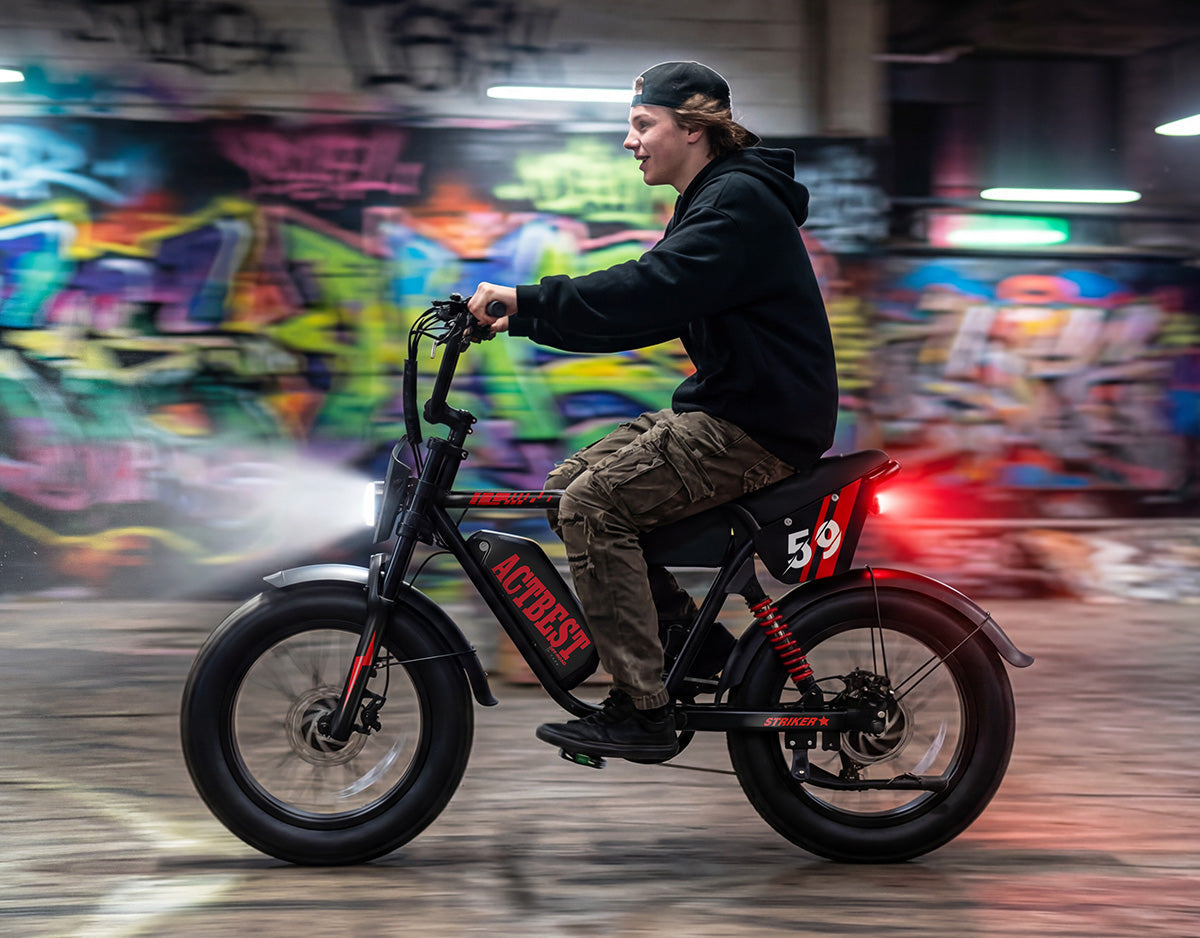
More adults are using moped style e-bikes as daily commuters, and it's easy to see why. The comfortable seat, fat tires, powerful motor, and relaxed riding position can make the daily ride more enjoyable than a standard commuter. They also look great, which doesn't hurt.
That said, there are some trade-offs worth understanding before you buy. Weight, storage, and how your commute works day to day all affect whether a moped style e-bike is the right choice.
Here's what you need to know.
 Why Adults Choose Moped Style Ebikes for Daily Riding
The look is part of it. A moped style e-bike looks very different from a regular commuter, and for a lot of riders, that's a big part of the appeal.
But comfort is the main reason most adults choose them over a regular e-bike, as sitting on a narrow saddle every day can get uncomfortable over time. The bench seat on a moped style e-bike is wider, longer, and more forgiving. The upright riding position keeps pressure off your wrists and lower back, making a significant difference to how much you enjoy the ride.
Moped style e-bikes give you confidence, too. The wide tires and heavier frame feel stable and planted in a way that lighter bikes don't, particularly on rougher urban roads. Riders who are new to e-bikes often find them easier to get on with in the early days.
Comfort Benefits: Seat, Tires, Suspension, and Riding Position
The fat tires are where the real comfort comes from. The actbest Striker uses 20x4.0-inch tires and, on that width, absorbs the potholes, bumps, and vibrations that send shocks straight through a narrower tire. Your hands and back feel far less of it by the end of the ride.
 Both the Striker and Striker Plus come with full front and rear suspension. On badly maintained urban roads, the combination of suspension and fat tires means you arrive in noticeably better shape than you would on a rigid-frame commuter.
The other thing worth noting is braking, as an e-bike's braking system affects how it performs. For example, the actbest Striker has mechanical disc brakes, which are reliable in most conditions. But the Striker Plus has more powerful hydraulic disc brakes, which require less hand effort and respond more precisely in wet weather. If your commute involves faster roads or you ride year-round, you should consider the type of braking system a bike has.
Battery Range: How Far Can a Moped Style Ebike Go?
The actbest Striker is powered by a 48V 15.6Ah battery with a claimed range of up to 75 miles on pedal assist. The Striker Plus uses a 52V 20Ah battery with a claimed range of up to 90 miles.
The average US round-trip commute is less than 20 miles. The good thing is that either model can go that far without getting close to empty, even accounting for hills, stop-start riding, along with real-world conditions that reduce the claimed figure. If your commute is closer to 30 miles round-trip, you're still fine on a single charge at moderate assistance levels.
Manufacturers' range figures are always measured under ideal conditions, so budget for around 60-70% of the number if you ride at higher assist levels or on hilly terrain. For commutes of 40 miles or more each way, you might want to look into charging at work to ensure you can get home. The Striker takes seven to nine hours for a full charge.
Power and Speed: What Commuters Should Know
The Striker has a 1800W peak motor and gives you a top speed of 35+ mph. The Striker Plus has a 2000W peak motor and hits 38+ mph. You'll rarely reach those speeds on most commutes, but the extra grunt helps on climbs and when you need to keep up with traffic.
Both sit in Class 3 e-bike territory under US federal classifications. The moped style name causes confusion on this point, as these are still pedal-assisted bicycles under federal law, not motor vehicles. A small number of states have their own rules around higher-powered e-bikes, so check locally before you buy.
Weight and Parking: The Practical Downsides
The Striker weighs 84.9 lbs, which you don't really notice on the road as the motor handles the extra weight. However, you'll notice the weight when carrying it up stairs, loading it into a car, hauling it through a narrow building entrance: all of these are harder than on a lighter commuter. If you have to do these things a lot, it's worth thinking through before you commit.
Parking takes more planning with moped style e-bikes, too. For example, the Striker is wider and longer than a standard commuter bike. At a shared bike rack, it takes up more space, and fitting it in without blocking other bikes needs more care. You may have to find a dedicated spot near their building and skip the shared rack entirely.
Moped Style Ebike vs Electric Scooter vs Electric Moped
These three categories are regularly confused, and the differences matter for how and where you can ride.
A moped style e-bike has pedals and qualifies as a bicycle under US e-bike law within Class 1 to 3 limits. You can ride them on bike lanes, bike paths, and roads, just like any other bicycle, with no licensing or registration in most states. In the 37 states that have adopted the three-tier system, you don't need a license, registration, or insurance to ride a Class 3 compliant model.
If you want to ride an electric scooter, you need to know that these are classified differently by state. Stand-up scooters above certain power or speed thresholds often require registration and may not be permitted on bike lanes. The rules vary widely by city and are less consistent than those for e-bikes.
An electric moped is a motor vehicle. Registration, a license in most states, and insurance are all required. It can go faster and further, but the administrative and running costs are considerably higher. For most commuters, the moped style e-bike is just as practical with none of that overhead.
Best Moped Style Ebikes for Commuting
The actbest Striker is the right pick for most urban commuters. The 1800W peak motor, 48V 15.6Ah battery, and up to 75 miles of range comfortably cover a typical daily commute. Full suspension and 20x4.0-inch fat tires handle rough urban roads well, and the 360 lb payload capacity means carrying a bag or groceries isn't an issue. It fits riders from 5'3" to 6'3" and starts at $699.
The actbest Striker Plus is the one you should choose for longer rides or if you want better braking. The 52V 20Ah battery gives up to 90 miles of range, and the hydraulic brakes give more precise stopping power with less hand effort. At $999, it costs more, but the spec step-up is worth it for daily use at higher speeds or in wetter climates.
Who Should Choose a Moped Style Commuter Ebike?
A moped style e-bike works best for commuters on roads or dedicated paths, covering 30 miles or fewer on a round-trip. It suits riders who want comfort and a bike that stands out. If your commute is relaxed, your storage situation is sorted, and you want a daily ride you enjoy in a way a standard commuter doesn't offer.
It's not ideal for dense city commuting, where a narrower frame helps, or for anyone who needs to carry the bike upstairs regularly.
Browse the full moped style e-bike range at actbest and find the right fit for your rides.
FAQ
Is a moped style e-bike legal to ride on public roads? Yes, in most US states. A Class 1, 2, or 3 compliant e-bike is treated as a bicycle under state law with no license, registration, or insurance required. The moped style frame doesn't change that classification. Check your specific state's rules to confirm.
Is the range enough for a daily commute? Yes, for most riders. The Striker covers up to 75 miles on pedal assist, and the Striker Plus takes you up to 90 miles. A 20 to 30-mile round trip is well within both, and charging at work handles anything longer.
Are moped style e-bikes too heavy to park and handle? They're heavier than standard commuters. The Striker weighs 84.9 lbs, which is fine for riding but harder to lift. If your commute involves carrying the bike regularly, a lighter commuter e-bike is worth considering.
How does a moped style e-bike compare to an electric scooter for commuting? A moped style e-bike qualifies as a bicycle in most states, with no licensing required and full access to bicycle lanes and paths. Electric scooters face more variable state regulations and often have more restricted access to bike infrastructure. For most commuters, the e-bike is the simpler and more practical option.
Share:
Best Electric Bikes for Women: How to Choose the Right One
Types of Electric Bikes for Adults: How to Choose the Best E-Bike for Commuting, Comfort, Storage, and Everyday Riding