
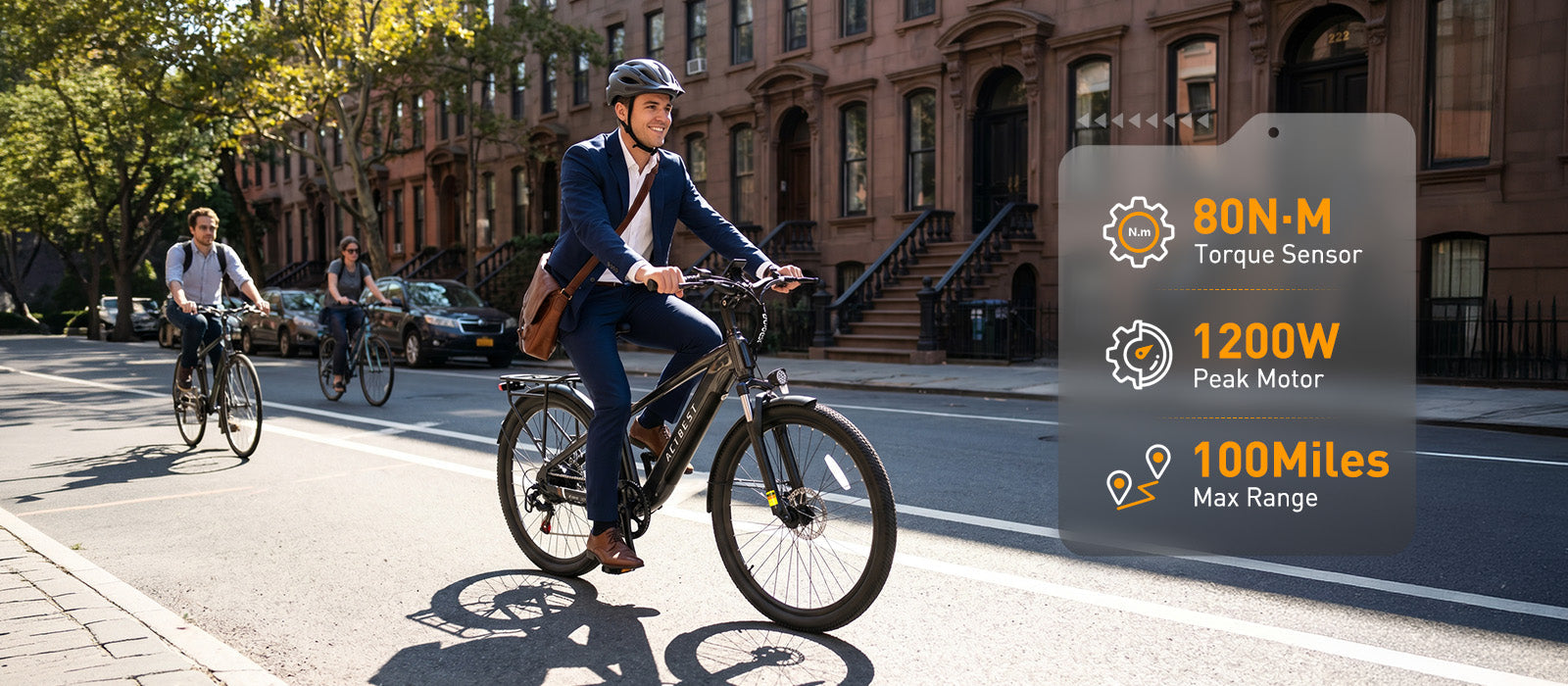
Nobody wants to spend their day sitting in traffic, paying a small fortune for public transport, or arriving at work drenched in sweat. For a long time, those felt like the only options — drive or cycle. But now there’s a middle ground. Using an e-bike for commuting is a practical, cost-effective alternative.
E-bikes have grown rapidly in popularity. With better battery technology, getting from A to B on two wheels is faster and more accessible than ever. Instead of choosing between unreliable transport and exhausting rides, you get a balance between the two.
But is commuting by e-bike actually worth it — or just hype? Here are the reasons to consider it.

Why More People Are Switching to an E-Bike for Commuting
Just a few years ago, e-bikes were a niche product. Now they’re everywhere.
There’s a good reason — spiking fuel prices and declining costs of e-bikes mean people are turning to cycling as a convenient, reliable way to commute. Urban congestion is also worsening. So, where people once enjoyed a quick drive home, they’re now stuck in traffic for hours.
Cities have responded by improving cycling infrastructure. That means e-bikes are often quicker and more convenient than a car — and much cheaper than public transport. Plus, even with a motor, there are considerable health benefits. It’s most people’s daily dose of exercise.
10 Reasons to Use an E-Bike for Commuting
1. You’ll Save Time in Traffic
Who’s got time to sit in traffic? As of 2025, US drivers lost 49 hours in traffic, roughly equivalent to a whole week at work ($894 in lost time per driver).
Rather than face the daily gridlock, e-bikes provide a quick and easy way to get home. There’s far less traffic on cycle paths, and bikes can easily pass cars stuck in traffic. That means you can almost guarantee how long a journey is going to take you.
2. Lower Commuting Costs
Letting your car idle in traffic costs a lot of money. But when the alternative is just as congested public transport, the costs don’t look much better.
E-bikes, by contrast, are much cheaper in the long term. While there’s a small cost to recharge the battery, overall, without fuel, e-bikes are a fraction of the cost. Plus, if you leave your car at home, it’ll need less maintenance.
3. Less Physical Effort (Without Losing Exercise)
Previously, the only option for people who wanted to cycle was a pedal bike. People would arrive at work already exhausted and drenched in sweat. They’d need to shower a second time.
E-bikes still let you pedal. But thanks to pedal assist, you can grind up hills or along your normal commute without finding yourself completely wrecked. In fact, many e-bikes provide more power the faster you pedal, reaching speeds of up to 28 mph.
4. More Consistent Commute Times
For most people, commuting can last anywhere from 30 minutes to 3 hours. Depending on the time of day and year, what should be a quick drive can suddenly turn into an ordeal. Try public transport, and you’re dealing with delays and cancellations.
E-bikes face none of these issues. You follow the same route at a consistent pace each day. That means you’ll notice exactly how long your commute lasts (give or take a few minutes).
5. Better for Short to Mid-Distance Travel
E-bikes increase the potential range of a commute. But they’re still not suited for long-distance travel. If your commute is around 2–10 miles, they’re ideal. Longer distances are still possible, but range and comfort become more important.
6. Easier Hills and Longer Routes
Lots of people have tried cycling to work. However, longer routes or a particularly tricky hill meant they just couldn’t sustain it day in, day out.
E-bikes change the formula. The pedal assist (or throttle on some models) allows you to power up hills or tackle longer routes without getting exhausted.
7. Environmentally Friendly Option
Are you environmentally conscious? If so, e-bikes are the ideal option. They also have a very low environmental footprint — far lower than cars, and often comparable to public transport.
Sustainability isn’t just about the environment either. Maintaining an eco-friendly habit is the most important kind of sustainability. That’s what turns a nice idea into something you actually stick with.
8. Reduced Stress Levels
Commuting is stressful. Gridlock traffic, jam-packed public transport, managing delays — it’s no surprise that people are ground down by their daily trek. The constant sensory input can drain you in a matter of minutes.
According to research, commuters can experience a racing heart, sweating, anxiety, and irritability. It also drops people’s mood.
Cycling, on the other hand, doesn’t come with the same frustration. You can enjoy a relaxing ride to work, opting for bike trails and cycle lanes that avoid traffic. With the right infrastructure, it’s the most pleasant option.
9. Flexible and Convenient
This is where e-bikes really stand out. You don’t have to think about parking, walking from a station, or timing your journey around a schedule. You just get on and go — straight from your door to where you need to be.
It also makes everyday life easier. Need to stop at the shop on the way home? Take a different route? Leave a bit later than planned? You can. There’s very little resistance to it, which is what makes people stick with it long term.
10. Encourages More Regular Riding
Be honest: even with the best intentions, cycling to work is a lot of hassle. If you’re tired, it’s cold, or there’s any obstacle, driving to work becomes a lot more appealing.
E-bikes reduce this risk. Because there’s a lower barrier to use, it often leads to higher consistency. Just jumping on your bike, knowing the motor will pick up some slack, is a great motivator. You can even increase your assist level if you’re really not feeling it.
How Much Can You Save Commuting by E-Bike?
Car vs E-Bike
Commuting is expensive. You probably haven’t added up every single expense. But it’s a lot. Running a car, for example, can easily cost $300-$800+ per month, when you factor in fuel, insurance, maintenance, and parking.
An e-bike, on the other hand, typically costs $5-$15 per month to charge, with minimal maintenance on top. Even if you spread the upfront cost of the bike, it’s still far cheaper over time.
Of course, you’re unlikely to abandon your car entirely. But just cutting down your miles can drop fuel, maintenance, and parking costs considerably.
Public Transport vs E-Bike
Monthly public transport passes often range from $80 to $200+, depending on the city. That’s cheaper than running a car, but compared to an e-bike, there’s no competition. In fact, the entire cost of an e-bike might be roughly equivalent to a year of traveling on public transport.
Who Benefits Most from an E-Bike Commute?
E-bikes aren’t for everyone. If your daily commute is a 20–30-mile drive, you’re not going to manage that on a bike (even with a motor). Instead, e-bikes work well for:
· Urban commuters – Great for short trips, traffic, and avoiding parking altogether
· Suburban commuters (mid-distance) – Makes 3–10 mile journeys feel manageable without the effort
· People returning to cycling – Easier to get back into riding without worrying about fitness or hills
· Time-poor professionals – Quick, reliable travel without delays, parking, or strict schedules
If your commute fits into the range, an e-bike is one of the simplest upgrades you can make to your daily routine. You’ll eliminate those frustrating frictions like traffic delays and parking, without turning your journey into hard work.
Find the Right E-Bike for Your Commute
If you’re considering making the switch, it’s worth choosing a bike that actually fits how you ride day to day. For commuting, that usually means a balance of range, comfort, and reliability — not just raw power or top speed.
You can explore our range of commuter-focused ebikes here.
Whether you’re dealing with short urban trips or slightly longer suburban routes, the right setup can make the difference between something you try once and something you stick with long term.
FAQs About Using an E-Bike for Commuting
Is an e-bike good for commuting?
Yes. An e-bike is one of the best ways to commute. With modern e-bikes reaching top speeds of 28 mph, you can reach your destination quickly, smoothly, and with little to no exhaustion. It offers the convenience of a car with the exercise of cycling
How far can you commute on an e-bike?
That depends on the model. However, many e-bikes have ranges between 20 and 70 miles — some go even further.
Do you still get exercise on an e-bike?
Yes — pedal assist doesn’t mean you don’t do anything. You still pedal as you normally would, but the motor just adds extra power. That helps reach higher top speeds or tackle difficult terrain like steep hills.
Are e-bikes expensive to run?
No. Compared to other commuting options, they’re by far the cheapest. You can expect it to cost around $5-$15 to charge an e-bike per month, plus minimal maintenance costs.
Can you use an e-bike in the rain?
Yes. Most e-bikes are water-resistant and designed to handle rain, but they’re not fully waterproof. Riding in heavy rain is fine. Just avoid deep water or submerging components.
Share:
Best Electric Bikes Under $1,000
What is a Step Through E-Bike?