
Torque sensor e-bikes have moved from a premium feature to something you can now find at a wide range of price points. That's great news for riders, but it also makes the buying decision more complicated. When every brand is advertising e-bikes with torque sensors, which one is best?
This comparison looks at four brands worth considering: actbest, Aventon, Himiway, and Engwe. Each takes a different approach to torque sensor assist, and each suits a different type of rider. Some are built purely for city commuting, others for mixed terrain or portability. Here's how they stack up.

What to Look for in a Torque Sensor e-bike
Before getting into the brands, it's worth knowing what matters when comparing torque sensor e-bikes.
The sensor type is just the starting point. How quickly it responds, and how it works with the motor and battery, all affect how it rides and the experience it gives you. A torque sensor on a poorly matched system won't feel as good as a well-tuned cadence sensor on a quality bike, so it's difficult to get a picture of how good a bike is just from the specs alone. Response time, sensor placement, and how the motor controller interprets the signal all affect how natural the assist feels.
Battery voltage is another factor that's easy to overlook. A 52V system delivers more consistent power than a 36V system under load. This will make a difference, a significant difference, particularly on hills or with a heavier rider.
You also need to consider other factors, such as motor power, battery capacity, range, brakes, frame design, and price. If you want to use the e-bike for commuting, you should look for practical features like integrated lights, fenders, and racks, which matter more than most people expect. A bike that requires you to add these after purchase will cost more in the end than one that comes equipped from the start.
With that in mind, here's how actbest, Aventon, Himiway, and Engwe compare.
actbest: Best Value Torque Sensor e-bike

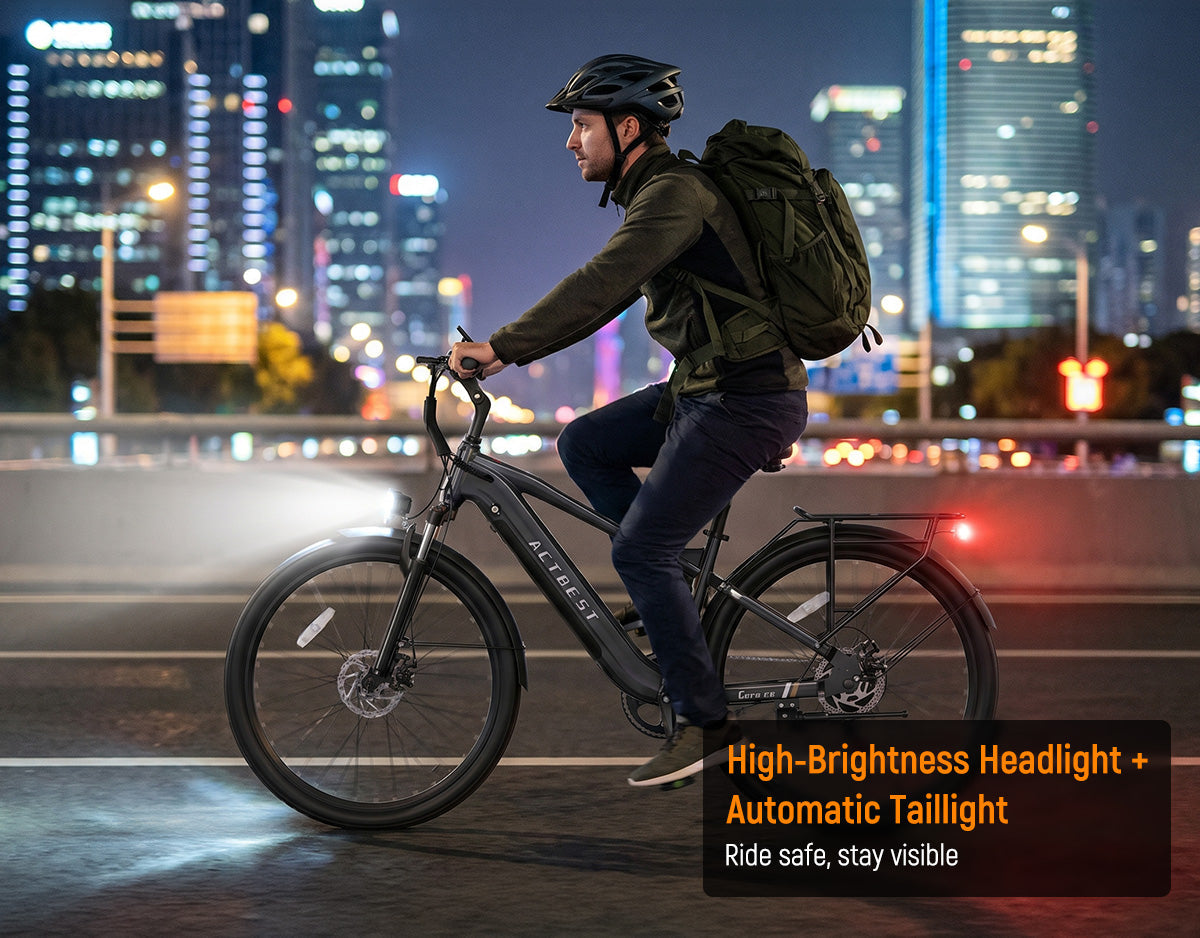
actbest entered the torque sensor market recently with two models: the Core ST 2.0 27.5-inch and the Core 2.0 27.5-inch. Both are built specifically for city commuting and priced at $899, making them the most affordable torque sensor commuter e-bikes in this comparison.
Key specs:
• Motor: 1200W peak hub motor
• Battery: 48V 12Ah
• Range: Up to 100 miles
• Top speed: 28+ mph
• Wheels: 27.5-inch
• Sensor: Torque sensor
The figure you really want to pay attention to here is the range. These e-bikes could give you 100 miles from a 48V, 12Ah battery, putting both models well above most bikes at this price point. In real-world commuting conditions with moderate assist, the range should comfortably cover most daily round-trip rides without recharging.
The Core ST 2.0 uses a step-through frame, making it easier to get on and off in stop-and-go city traffic. The Core 2.0 is the step-over version for riders who prefer a traditional frame. Specs are otherwise identical.

At $899, these are the most accessible commuter e-bikes in this comparison. The trade-off is that actbest is a newer brand with a less established reputation than Aventon or Himiway, and its bikes are more stripped back, with fewer extras like suspension and integrated tech. There's no built-in GPS, no app connectivity, and no suspension fork. But for riders who want a torque sensor commuter without paying a premium price, and who are riding primarily on smooth urban roads, they're a great option that's hard to argue with at this price point.
Go with actbest if: you want torque sensor assist at the lowest price in this group, and your riding is primarily urban commuting on reasonably smooth roads.
Aventon: Best All-Round Torque Sensor Commuter

Aventon's Level 3 is one of the most talked-about commuter e-bikes on the market right now, and for good reason. At $1,899, it costs significantly more than the actbest models, but it brings a level of specification and technology that justifies the price for the right rider.
Key specs:
• Motor: 500W nominal / 864W peak hub motor, 60Nm torque
• Battery: 36V 20Ah, 708Wh
• Range: Up to 70 miles
• Top speed: 28 mph (Class 3 unlockable)
• Brakes: Hydraulic disc (Magura AT-2 or Tektro)
• Suspension: 80mm fork, suspension seatpost
• Drivetrain: Shimano Altus 8-speed
• Sensor: Switchable torque and cadence
One of the Level 3's interesting features is Aventon's Sensor Switch. This device lets you toggle between torque and cadence modes. That's a useful option, as you can select torque mode for responsive, natural assist on hills and commuting, or cadence mode if you want more consistent power on flat roads.
The ACU technology package adds GPS tracking, an electronic rear wheel lock, movement alerts, and remote shutdown through the Aventon app. For a bike used as a car replacement, that level of built-in security is a great advantage, as you're not just relying on a lock.
The Level 3 also comes with integrated lights with turn signals, front fenders, and a rear rack rated to 60 lbs. The suspension fork and seatpost make city roads noticeably more comfortable than a rigid setup.
The main considerations are weight (67 lbs is on the heavier side) and price. At $1,899, it's more than double the price of the actbest models, and the 36V system, while efficient for range, delivers less aggressive power than a 48V setup.
Go with Aventon if: you want a fully equipped commuter with built-in security tech, a premium ride feel, and the flexibility of switchable sensor modes.
Himiway: Best Torque Sensor e-bike for Versatility

Himiway's A7 Pro costs $2,599 and takes a different approach to the other bikes in this comparison. This is a full-suspension commuter for people who ride on rougher streets or paths, and the switchable torque and cadence sensor system gives it flexibility across different riding conditions.
Key specs:
• Motor: 500W mid-drive
• Battery: 48V 15Ah, 720Wh
• Range: Up to 50 miles
• Top speed: 28+ mph
• Brakes: Hydraulic disc
• Suspension: Full suspension
• Sensor: Switchable torque and cadence
Most commuter e-bikes only come with a front fork at best. The A7 Pro's full-suspension setup absorbs bumps front and rear, making a noticeable difference on rough city roads, gravel paths, or light trail use.
The switchable sensor system works well. The torque sensor mode gives you responsive, proportional assistance for commuting and riding up hills. The cadence sensor mode keeps power consistent for longer, flatter rides when you want the motor to do more work.
The trade-off compared to Aventon is the range. At up to 50 miles, it's lower than both the actbest and Aventon models, and there's no integrated security tech to match Aventon's ACU system. It's also a heavy bike, so it's not the easiest to carry up stairs or store in a tight space.
Go with Himiway if: your commute involves rougher roads or mixed terrain, and you want full suspension alongside torque sensor assist.
Engwe: Best Budget Torque Sensor e-bike for All-Terrain Riders

Engwe takes a different angle again. The Engine Pro 2.0 is a folding fat-tire e-bike with a torque sensor, priced around $1,099 in the US. It's not a pure commuter like the others, but it has a few benefits that are worth knowing about.
Key specs:
• Motor: 1200W peak, 75Nm torque
• Battery: 52V 16Ah
• Range: Up to 68 miles
• Top speed: 28 mph
• Brakes: Hydraulic disc
• Suspension: Full suspension
• Tires: 20x4.0-inch fat tires
• Sensor: Torque sensor
The 52V battery is an advantage here, as higher voltage generally means more consistent power delivery and better performance on hills and under load. The 16Ah capacity gives the Engine Pro 2.0 a range that rivals that of more expensive bikes.
The folding frame and fat tires make it versatile. You can take it on public transport, store it in a small apartment, and ride it on surfaces that would challenge a standard commuter tire. The full suspension adds to that versatility.
The main trade-offs are the wheel size and overall feel. 20-inch fat tires handle well on rough terrain but don't roll as efficiently on smooth roads as the 27.5-inch wheels on the actbest and Aventon models. The folding frame is also heavy despite the compact design.
Engwe is a Chinese brand with a growing presence in the US market. Support and after-sales service are worth researching before buying, though the brand has expanded its US dealer network.
Go with Engwe if: you need a folding e-bike that can handle varied terrain, want a 52V system at a mid-range price, and don't mind the smaller wheel size.
How Do They Compare?
|
|
actbest |
Aventon |
Himiway |
Engwe |
|
Price |
$899 |
$1,899 |
$2,599 |
~$1,099 |
|
Motor (peak) |
1200W |
864W |
500W mid-drive |
1200W |
|
Battery |
48V 12Ah |
36V 20Ah (708Wh) |
48V 15Ah (720Wh) |
52V 16Ah |
|
Range |
Up to 100 miles |
Up to 70 miles |
Up to 50 miles |
Up to 68 miles |
|
Suspension |
Front suspension |
Front fork + seatpost |
Full |
Full |
|
Sensor |
Torque |
Switchable |
Switchable |
Torque |
|
Brakes |
N/A |
Hydraulic disc |
Hydraulic disc |
Hydraulic disc |
|
Folding |
No |
No |
No |
Yes |
Which Brand Is Right for You?
The right choice depends on how you ride and what you're willing to spend.
If budget is the priority and your commute is on paved roads, the actbest Core ST 2.0 or Core 2.0 provides torque-sensor assist and an impressive claimed range at a price none of the others can match. You do get the core functionality for significantly less. For a first torque sensor e-bike or a no-frills daily commuter, that's a reasonable trade.
If you want the most complete commuter package and don't mind spending more, the Aventon Level 3 is a good option. The switchable sensor, ACU security system, hydraulic brakes, suspension, and full equipment spec make it a good daily commuter. It's the most expensive in this group, but it also has the most features.
If your routes aren't just smooth roads and you want full suspension and torque-sensor assist, the Himiway A7 Pro makes a strong case. The range is lower than the others, but the ride quality on rough surfaces is pretty good, and the switchable sensor gives you flexibility that a fixed torque sensor system doesn't.
If portability and all-terrain capability matter more than a traditional commuter setup, the Engwe Engine Pro 2.0 offers a 52V system and genuine versatility at a price between actbest and the premium options. It's the only folding bike in this group, and the fat tires open up surface options that the others simply can't match.
FAQs
Do all four brands use the same type of torque sensor? No. actbest and Engwe use dedicated torque sensors. Aventon and Himiway both offer switchable systems that let you toggle between torque and cadence modes, which adds flexibility but also complexity.
Is a higher wattage motor always better? Not necessarily. Motor tuning, sensor responsiveness, and battery voltage all affect how power is delivered in practice. The Aventon Level 3's 864W peak motor, for example, is well-tuned and performs strongly despite lower peak figures than the actbest.
Which is best for a hilly commute? Any of these bikes will handle most city hills. For consistently steep terrain, higher torque figures help. The Engwe Engine Pro 2.0's 52V system and the Himiway A7 Pro's 500W mid-drive motor both perform well on gradients.
Can I use these bikes in the rain? Yes. All four brands build their commuter models for everyday use, including wet weather. Hydraulic disc brakes, which three of the four models feature, handle wet conditions better than mechanical or rim brakes.
Final Thoughts
Torque sensor e-bikes are now available at a wide range of prices and specifications, and all four brands in this comparison offer a good riding experience. The differences are in how much you want to spend and what extras matter to you.
actbest offers the most accessible entry point into torque sensor commuting. Aventon delivers the most complete package for riders who want everything included. Himiway is the pick for versatility on mixed terrain. Engwe suits riders who need portability alongside performance.
If you're looking for a torque sensor e-bike that balances performance and value for daily commuting, the actbest range is one of the best places to start.
Share:
Why Electric Bikes Are Transforming the Future of Commuting
The e-Bike Sweet Spot: Top Mid-Range e-Bikes Under $1,000 (+Top Budget Picks)